00:00:00:00 - 00:00:33:29
Welcome to The Catalyst, an exciting and insightful podcast produced by Northeast Iowa Community College. I'm your host, Amy Lasack. Together, we'll explore the people, programs, and partnerships that make Northeast Iowa Community College unique. From student success stories to behind the scenes info about athletics, innovation and industry collaboration. Each episode dives deeper into your community's college. Get ready for an inside look at the impact of community driven education at NICC.
00:00:34:03 - 00:00:55:18
Great. Welcome to The Catalyst, everyone. Today's episode is all about working with adults and young people who are taking some big steps. And whether that's finishing high school, learning English, or figuring out what's next for them in life after some changes or some job losses. It's about programs that change our lives every day. For people that need just the right support at the right moment.
00:00:55:19 - 00:01:19:02
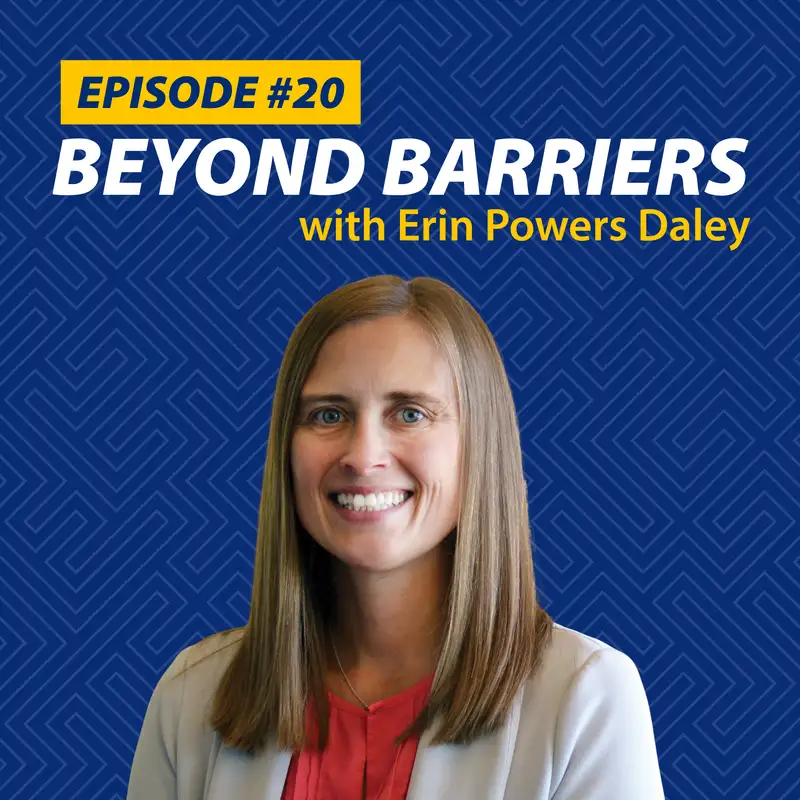
So today we're going to talk about what these programs are and who they serve and why that matters. So today we welcome NICC’s executive Director of workforce and Programming, Erin Powers Daily. Aaron's work at the College bridges community, Industry and education to provide solutions across Northeast Iowa. Welcome, Aaron. Thanks for having me. I always want to say long time listener, first time guest.
00:01:19:02 - 00:01:47:21
So I'm appreciative of the opportunity. So that's great. Well, hopefully we can have you back lots of times. But I want to first start off by saying that we do use a lot of acronyms at Northeast Iowa Community College or. Particularly in the programs that we're going to be talking about today. So we're gonna try our best to explain what those acronyms are and breaking down the structure of this entire world of programs that help support so many of our students.
00:01:47:27 - 00:02:10:02
I think these these programs don't get enough attention, and they sometimes can be unnoticed, and people don't know they're there to support them. So, Erin, I'm going to have you start like big picture. We are on workforce innovation opportunity. Can you tell us about that? Break it down by title one. Title to what that is. Let's start with talking.
00:02:10:05 - 00:02:34:06
Yeah, yeah. So I actually where I best learned about we all was I really like to look at Wioa workforce Innovation opportunity Act as a break big umbrella. Right. So it's a federal program that is designed to connect people to employment through training, education and supportive services. So that broader umbrella is responsible of covering four main title programs.
00:02:34:08 - 00:03:00:28
Title one is the adults dislocated workers and then the youth in in school and out-of-school youth. Title two is what we consider our adult education programing. Title three is employment services. Historically, hosted at our Iowa Works Partners offices, and then title four is Vocational Rehabilitation services. So the broader umbrella of we all is there. And then we have our four core partners that we fall under that umbrella.
00:03:01:00 - 00:03:31:21
NICC particulary is responsible for our title one program. And we actually have that in partnership as a consortium model with North Iowa Area Community College. And then we also hold that title too. So that adult education grant, and we hold that many of the other community colleges in the state of Iowa also hold that grant. So we're responsible primarily for those title one and title two programs, but we're also responsible to partner across the other core partners of Iowa Vocational Rehabilitation.
00:03:31:21 - 00:03:51:18
And then the employment services that we offer at our Iowa Works offices. So yeah, so that's a really it's a whole system to really assist. It just broken down in these different titles. So let's let's focus on title one for a little bit now. NICC has really been working with that for every two years this summer I think.
00:03:51:18 - 00:04:12:00
Yep, yep. Can you break down again those, different pieces under that dislocated worker in school? At a school youth? What is the audience that we can help with? There? Yeah, definitely. So, as I alluded to earlier, within our We Are a title one program, there's three primary populations that we work with under that, program.
00:04:12:08 - 00:04:31:12
So we have our adults, our dislocated workers and our youth program, which includes both in school and on the school year. So we'll start at the bottom right. So we'll look at the youth program. This program serves, youth that are ages 14 to 24. They could be actively enrolled in an educational program, or they could be in a outside of a program.
00:04:31:12 - 00:04:51:18
So they're not completing their high school education or they're not, enrolled in a college program, but they're meeting those criteria. Our youth program really works to meet our young people who have faced a lot of barriers. Perhaps they're involved with the justice system. Perhaps they just didn't finish high school, did a lot of things out of their control.
00:04:51:20 - 00:05:15:06
Many of them that we work with have experienced instability, or they just didn't see themselves in that traditional what I like to kind of call that sit and get model of education. So really, the goal of our youth program is to helping those students or those participants really focus on what's it going to take for them to complete that education, whether that's helping them earn their diploma or complete their high school equivalency diploma?
00:05:15:09 - 00:05:36:23
Build workforce readiness by partnering with an employer who's willing to host them to a work experience, or helping them to explore a pathway at the credit or the noncredit side of the college. It's really about helping them create that momentum, helping them also believe that they're capable of that and that they have the skills that to enter into the both the education and the workforce environment.
00:05:36:23 - 00:05:57:09
And then along the way, we're able to help incentivize them so we can help support them with transportation costs. If they're a young parent, we can help with some of those childcare costs as well, but we can also work with them just to meet the basic needs of that skill set. So that's sort of in a nutshell, what that youth program really does for both are in school and or out of school youth.
00:05:57:11 - 00:06:15:08
The adult program is a little bit broader. So the adults are obviously anybody who's over the age of 18 years and older. We traditionally are working with a lot of our adults that they're working really, really hard, but they just need to level up a little bit. They could be a veteran. Maybe they're just low income.
00:06:15:08 - 00:06:35:27
They may have a disability and they're Cohen Road, where Iowa Vocational rehabilitation program for adult students is really good. Maybe they just need a short term training. Maybe they already have a degree, but they need a different credential in order to advance their career. Much like our youth, we can also provide wraparound services for those adults as well.
00:06:36:00 - 00:06:52:06
Transportation and child care continue to be some of our biggest, funding that we assist them with, but we also help get them connected to employment or those trainings that they might need. The goal with this population that I sort of look at and I sort of simplify it, is they want to get a job or a better job.
00:06:52:06 - 00:07:12:07
So what can we do? Through our we owe a title one program to help them get stable. Offer them that growth growth opportunity and then really just sort of help them get along that pathway that's going to help elevate their skill set, to higher employment opportunity for them. Yeah. And that can be really scary, for them to, to do that.
00:07:12:09 - 00:07:31:16
I know, I know, a lot of folks that we hear from that are like, I can't stop working in order to go through training, but I'm working at a job that isn't making it for me. I'm still in poverty, right? Right. And so we have needs to help them, right? So we can really incentivize that for them. We can help with the transportation.
00:07:31:16 - 00:07:49:26
So maybe they don't have to worry about that cost to get to the training. We can help reduce that barrier by providing support for the childcare funding. Lots of different ways that we can help reduce that. We just need to know what those barriers are for those participants. The last program that that falls under this umbrella, is our dislocated workers.
00:07:49:28 - 00:08:07:10
This is anybody who is 18 years and older. They are displaced from employment by no fault of their own. Now, that can be a lot of different things. Traditionally when people think of that, they think, well, the company shut down. There is a massive closure. That's not the only people that can benefit from the dislocated worker program.
00:08:07:13 - 00:08:23:26
The dislocated worker program is really there to help support people who have lost a job in a variety of different ways. Could be a layoff or a closure. But perhaps they had to relocate. Maybe their spouse had to relocate, and they were actively employed, but they had to move so that that might be a qualifying factor.
00:08:23:29 - 00:08:45:20
A lot of the times this population has been successful employee successfully employed for many, many years. But then suddenly something changes, right? So they have to look at, okay, where are my skills? What have I done in the past? Am I interested in something new? Is this an opportunity that I can take advantage of? And really work with a consultant to help me figure out what that next pathway is.
00:08:45:20 - 00:09:12:21
So this this could look like a lot of different things. I tell my own team that there's no cookie cutter answer for anybody that walks through our doors, but let's help tailor what we can offer for them just by sitting with them. And really, at the end of the day, for all the populations I think our teams do an amazing job of meeting them where they're at and just helping them really feel confident about their choices and helping them know that they also have resources and support, and they don't have to do it all alone.
00:09:12:21 - 00:09:34:02
At the end of their day. Yeah. So if I'm an individual out there, I know of somebody who's been laid off and let's say they worked all their life as an assembler and a manufacturer, and they got laid off there, and they've always wanted to to be a nurse. This program might be a good opportunity for them to explore, because nurses are in such need.
00:09:34:02 - 00:09:56:05
Like that's one of the requirements, correct? That if you go back through training, it has to be an in-demand area. Yeah. Yeah. So that that's a great example right. So we have a lot of people that by no fault of their own they've been impacted. Right. But maybe they've always wanted to do something. So the goal of that is our team can meet with them, help them figure out is there a demand or are there ways in which we can support you along that way?
00:09:56:05 - 00:10:15:09
We're also going to help them with the career inventory. Maybe we can practice some interview skills with them. We can connect them with the training program. We can help them get a tour of a program. You know, we can really help them connect. We can connect them directly with an employer to ask more specific questions. We want them to be doing due diligence on their end to figure out, okay, is this what I want?
00:10:15:11 - 00:10:33:24
Is this what I need and how can we help them get there? So yes, we also have obvious, obvious regulations that we have to meet. It has to be an in-demand program or, job. It has to meet that certain criteria. But that's where our team comes in and really helps the students figure out what that next step is for them.
00:10:33:26 - 00:10:51:09
Can you talk about the team that's involved with these we our programs? Can you talk a little bit about that and what that might look like to somebody that's coming forward and wants to be a part of this program? Yeah. So when I say our team, I really they're doing everything that they can to help, our participants.
00:10:51:09 - 00:11:10:14
So we have, workforce consultants across their whole northeast Iowa Workforce Development Board region. That's a 20 county region. So as I said, we partner with Niac. We have a consortium, but we have consultants that are in office at our Iowa Jobs Training Center. They also go out to most of our center locations within our NICC region.
00:11:10:14 - 00:11:27:18
And then in the Nyack region as well. So they're really there to meet the participants, help them identify what are the barriers, what are your skill sets from before? How can we meld those together, and then what is it going to look like moving forward? They have obvious set requirements that they have to meet, as does the participant.
00:11:27:18 - 00:11:44:09
But the consultant is really there as a guide. We're there to help meet the student where they're at, but then we're also there to push them a little bit if they need that. And then we can, you know, help support them in navigating the multiple systems that they may have to participate in. That could also look like making a referral elsewhere.
00:11:44:10 - 00:12:05:26
If we can't necessarily provide something directly to them. We want to work with our other partners and other organizations in our communities to help bring access to those resources. That's going to help them be successful as well. Yeah, I think that's such an important part that this is a big decision for somebody to go back to school or get assistance once they've lost their job, and so they aren't alone.
00:12:05:29 - 00:12:24:26
If they they're a part of this program, they do have somebody there every step of the way to encourage them. And like I said, maybe push them outside of their comfort zone a little bit. Yeah, for sure. So let's let's jump into title two a little bit. So we were just talking about title one, the youth adult and dislocated worker program.
00:12:24:26 - 00:12:46:02
The other program that you talked a little bit about was title two. Can you lay the groundwork related to that a little bit again? Yeah. Yeah. So definitely. So title two is two primary programs. We have our adult education program. Historically high school diploma. And then we have our English for speakers of other languages or our ESL program.
00:12:46:02 - 00:13:02:28
So those are sort of the two key programs in it was in that we also just have adult basic education. So maybe a student has completed their high school pregnancy. They're not in English. They're not an Esol participant, but they just need a little bit of brush up. They need some of that access or our team is there for that as well.
00:13:02:28 - 00:13:24:26
So we help meet them where they're at along those programs. Again, all under that umbrella of Wioa. This program, particularly title two, adult education, is both federally funded and then it's supported by the state of Iowa as well. So we blend those dollars. And that's how we can help cover our whole NICC region, with our adult education programs.
00:13:24:28 - 00:13:46:24
Now, let's let's start with high school equivalency. I think there's a perception that the high school equivalency exam is less than a traditional high school diploma. How do you respond to that? Yeah, well, I think that's a common misconception, right? I've often heard, just in preschool, things like, well, that's an easy route. By no means is it an easy route.
00:13:46:24 - 00:14:12:16
Right. I personally don't know if I would be able to pass some of those tests. So I think that's a commonly held misconception that the high school occupancy is a less than in reality, our HCD or high school cogency program takes a lot of grit and determination and and resilience and intelligence. You know, a lot of our students are taking that pathway because they're balancing a work of family, other life things have happened to them.
00:14:12:16 - 00:14:34:17
So in addition to coming back and completing their education, they're trying to balance work and family and how they get through every single day. I think I always say that these students are some of the most motivated students we serve. They're so motivated to learn. It takes a lot to walk through that door, knowing that others are maybe viewing you in a way that you didn't finish something.
00:14:34:17 - 00:15:07:04
Well, I always look at is this is way your way to finish it? So this is the launch pad. This is the credential that we encourage all of our students to have. It's going to help you get employed. It's going to open up so many different doors. But it's a huge misconception that says easier route. Our students work so hard to get to where they need to be to complete that education, and I think most people would be surprised at the number of individuals that we serve for high school close and see and the number of graduates that we have can you talk a little bit about the numbers?
00:15:07:06 - 00:15:27:19
Yeah, I think last year I don't want to miss quote completely, but we had 80 plus graduates, across our district. And it's, it's remarkable to see that, you know, some of them come and they complete really quickly. So for some that's a realistic opportunity for them. Others it takes a little bit time. And they kind of come in and they kind of come out and I always look at on and off paths.
00:15:27:19 - 00:15:55:27
Right. So it it's this huge amount of people that we serve, and as many as we can get to that finish line. It's because our instructors are acting alongside of them and they're providing that support. They're an encouraging team. Whether it's the instructors, it's our testing team. They're helping them every single step of the way. They also are working with other agencies and nonprofits and other community service agencies to help reduce those barriers.
00:15:56:00 - 00:16:21:04
You know, there's so many students that I kind of look back and I think, wow, they've come through so much. Right. Just over the past year, you know, we've served so many students in different pathways. We had a mother son duo last year that completed their their education together. So to see that was really neat. Years ago we had a woman I want to say she was well into her 80s and she completed her high school diploma.
00:16:21:06 - 00:16:41:25
She never thought of it, but she realized I can do this too. She had raised all of her kids and she came back and never would have probably thought that until she realized she deserved that, too, after seeing her kids go through that. So there's so many different opportunities for these students, and it's just it's heartwarming, and their stories that will bring you to tears.
00:16:41:25 - 00:17:00:25
But to see what some of these students have been through, that's that's why that makes a huge difference for our communities. Yeah. It's it's an amazing night to go to the graduation ceremony for these students because they have walked so many different pathways. And it could be things like, you know, I got in trouble in high school and I just couldn't finish it.
00:17:00:25 - 00:17:25:04
Or I got bullied in high school and it wasn't a safe place for me, or I got really sick in high school. And so I couldn't finish so many different stories. But like you mentioned earlier, the resilience that these individuals have will bring you to tears. So if anybody's listening out there and hasn't been to, graduation ceremony and you want to please do reach out because it is one of the most rewarding nights to see.
00:17:25:06 - 00:17:49:18
Yes, I second that. So let's talk about the Esol program a little bit. I think a lot of people may assume that Esol students, maybe aren't educated or aren't skilled, but that really is the exact opposite for many of our students. Yeah. I again, I think that's a common misconception, right? So I think that assumption couldn't be further from the truth.
00:17:49:20 - 00:18:14:01
Many of our students are coming in with a degree. Many of them have degrees in their home country. They have experience in the trades, and they have vast professional backgrounds, language, not their ability, is the barrier. Right. So that language is the barrier. So once that language and that access can improve, their skills are going to shine. You just have to give them that opportunity.
00:18:14:01 - 00:18:38:12
Right. So there's so many of our students that have those skill sets that are sitting in our classrooms right now, and we can't wait to share that. We just need to help them get those language skill sets built up a little bit so that that they can bring their skills to their communities and their employers. Our program currently, we have, we're working with a local, employer, in the Manchester area, and we're providing training to their employees.
00:18:38:12 - 00:19:04:01
They just need a little bit of extra assistance. And that English language acquisition. And so they're already employed. They're already contributing. We're just there to help them along the way and also help that employer along the way to hire that population as well. Yeah. We hear from a lot of employers across the district on, how wonderful it is to have access to individuals that are maybe learning English and what they want to do to help support that.
00:19:04:01 - 00:19:22:13
And so it definitely is a population that I know our workforce is really needing. Yeah. Yeah for sure. And they they're coming in with so many skill sets. And again it's that grit and that's determination which you can't teach that right. That that's homegrown. That's within the student. And that's what they're bringing to the table, whether it's to the classroom or the employer.
00:19:22:13 - 00:19:56:00
That's something you can't teach. That's only something that comes with the person. Yeah, I think one of the great things and you talked a little bit about this, but the stories of the individuals that are going through these programs, because they are they are so strong, it can be so scary to take that first step. But as you mentioned, with the Wioa programs and also with the title two program, whether it's your high school equivalency or the Esol program, we have staff that are trained and are so supportive of the students that they see every day.
00:19:56:03 - 00:20:15:19
Yeah, I can't I can't thank our teams enough. Right. So, you know, if a student walks in, our staff is immediately rushing to help them. Whether that's via the phone or on zoom or physically in person, the team is there to help guide you that first step through that door, that first pick up of a call can be some of the scariest thing because it's unknown, right?
00:20:15:19 - 00:20:32:18
You don't know what it is. You know how to navigate it. But that's what our instructors and our consultants and our coaches are all there for. They're there to help support the student they can kind of help them guide along that pathway, not doing that for them, but helping them facilitate that and really working with the student and figuring out what's working for them.
00:20:32:21 - 00:20:48:11
They also are very understanding that life happens. Life happens to all of us. So how do we as a college support them on those on ramps and those off ramps, when some days we just can't do what we would have done maybe a couple of weeks ago when we first started enrollment. Okay, well then let's back off. Let's figure out what that looks like.
00:20:48:13 - 00:21:08:14
And there's going to be a place waiting for you if you even need to step out for a little bit. And it's really just about making that connection. And that's what our team is there for. They are hugely responsible for supporting their students through their programs and just encouragement. The motivation itself. Sometimes that's all our students need, but we also know that they need a little bit more.
00:21:08:14 - 00:21:24:13
And it's sometimes it's giving that little extra attention to our students to help them feel welcomed and seen. For some of our students, it's the first time that maybe they felt seen or heard. And so it's about creating that space where that's where that's where it can happen, and that's how we help see them to their finish line, whatever that may be.
00:21:24:13 - 00:21:44:01
For the student. Yeah. And I know for the high school equivalency graduates that a lot of times isn't the end for them. That's really the beginning for them. There's so many doors that open up after they get that, diploma. Can you talk a little bit about what sort of options are available for them at that point? Yeah.
00:21:44:01 - 00:22:01:09
So I like I said earlier, I think I mentioned it's a launch pad. Right. So getting your high school equivalency is a launch pad. Where is your next step, whatever that looks like for you? We have a lot of our students, that they complete our high school pregnancy diploma, and then they enter the workforce right away, or they're upskilling at work in their current employment.
00:22:01:09 - 00:22:23:17
But we often find that they come back after a few months, maybe a year or two. And they just feel comfortable coming back and testing the waters a little bit, meeting with their former coach and saying, hey, I think I'm ready. Some of our students go directly into a credit program. We had some of our students who completed their high school clearance last spring, and they immediately enrolled in our nursing program.
00:22:23:24 - 00:22:44:04
Right. So the cool thing about that is we also offer a scholarship for our students that are going that pathway. So whether they're choosing to go into a credit program or a career pathway certificate, we help facilitate, a free three credit, or equivalent, transition into a credit or noncredit program because they have completed their high school fluency.
00:22:44:06 - 00:23:00:28
I think the other layer of that is it may not happen right away. But the students have goals and we help meet them where they're at. We do our check ins with them. We follow up with them to see what they need. If employment for them is the direct pathway, let's get them connected to an employer.
00:23:01:00 - 00:23:18:29
Let's get them connected through our Iowa works partners. Help them find employment and placement. We have, our community partners as well, our business partners that are interested in these students. We really want to help meet the student where they're at. And sometimes that changes over the years. So yeah, it's a catalyst. Right. So it's really that first launch pad.
00:23:19:01 - 00:23:36:07
Many of our students over the years have gone on to do great things. We have students that have, actually completed their education in high school, clemency, and are now employees at the college themselves who have gone on to get their master's degree. Right. So it is just that launch pad to get them going in that education.
00:23:36:09 - 00:23:53:17
Yeah, such a great opportunity for them. Aaron, our last segment here is our fact or fiction segment. So I've got a couple, lines that I'm going to read off to you, and you just let us know that if it's true, if it's fact or if it's fiction, and why is it fiction? Are you ready? I'm ready.
00:23:53:20 - 00:24:19:23
All right, so the first one, you have to be a full time student to get Wioa support. Is that fact or fiction? Fiction. So we can help anybody, regardless of full or part time status. And that applies to work and education, right? So we're there to help. You will help you navigate through what that looks like, but definitely fiction three the dislocated worker program is only for people whose companies have gone out of business fiction.
00:24:19:23 - 00:24:45:01
So like I said earlier, it can be a lot of different things. It's not just for those that have been directly impacted by a closure. Great title. One can pay for things like transportation or childcare while you train staff. So that's just a couple of the ways, right? So I alluded to that earlier, but we can provide a lot of different, avenues and help incentivize that pathway for our students, including even helping you to get paid while you attend class.
00:24:45:03 - 00:25:04:05
That's the pathway that we have as well for our title, participants, if it fits them right. And title one can pay for both credit and noncredit offerings that we can help cover all of those costs. Depending on the, on the training. Got that? Definitely be in that high demand career area. And we have a cap.
00:25:04:05 - 00:25:28:01
Right. So we can't cover everything all the time. But we do have, the opportunity to help support them. Great. How about title one? And title two programs are only offered in Dubuque sections. So we actually cover a broad area, with our title two program. Obviously, we're bound by our Northeast Iowa, Community College region. But our title one program, we cover that 20 county area because we do have that consortium.
00:25:28:01 - 00:25:50:09
So we're everywhere from Dubuque, Decorah, Waterloo, Mason city, and everywhere in between. Great. How about if I'm an employer and I'm listening? I don't really have a role to play here. That's fiction. Because what we like to do is we want to work with you. You know, if you're an employer and you need a pipeline, reach out to us.
00:25:50:12 - 00:26:07:12
One of the cool things is we can help you find interns. We can create work experiences for some of our youth or out other school youth, and then we can actually help fund that component of it. So there's less burden for you as an employer to take that on. The goal is that we can work together along with you, and really help fill your workforce pipeline.
00:26:07:12 - 00:26:24:00
And we want to get creative and how we can do that. And we have those, participants that we can offer up for you. There are so many options for employers when they partner with us. All right. Last one, as an individual, I really should wait to know what I want to do before I sign up for an appointment to talk to somebody at NICC.
00:26:24:00 - 00:26:41:22
Is that fact or fiction? Fiction. You know, that's that's what our team is there for. We'll help you through that. If you have no idea, come in and have a conversation. We can help you take an inventory. We can sit and talk with you, will review your skill sets, will review your interests, and then we'll help you figure out how you can meet your goal.
00:26:41:24 - 00:27:00:04
Within that area. Great. So, Aaron, if somebody is listening and they're like, you know, I don't have my high school, education or I really want to learn English better or, I was just laid off or I'm a youth with barriers. This sounds like something that might fit for me. Where do they go to learn more?
00:27:00:04 - 00:27:18:29
What's their next step? Yeah. So what I would say is, feel free to reach out. We have our, all of our information is out on our website. Feel free to reach out to myself, even, we have Dan Crosley, who's our director of title two. We have Avery Nugent, who covers our title one program as well.
00:27:19:01 - 00:27:34:11
But you can also just call our general line and they'll get you to our teams as well. So, easy to do. You can reach out and we'll figure out where we need to get you. Great. And I know Tessa will have some QR codes that she'll put up to some of our websites as well, so feel free to check those.
00:27:34:11 - 00:27:57:00
But if if anything else, feel free to give us a call or send us an email. We'll be happy to help you. Great, Aaron, thank you so much. That time went by so quickly, but I'm really glad we had this conversation because these programs are more than funding. They're really about getting people a second chance or a fresh start or a clear path forward with the support that they need to move forward.
00:27:57:00 - 00:28:22:07
So thank you so much and thank you to the work that your team does every day with individuals that are needing just that little extra support. Yeah. Thank you and thanks for allowing us to do it. You know, it's great to provide the support to our students. Great. Thank you. And if today's episode helped you better understand what's possible or sparked a new idea, we hope you'll stay connected with us at The Catalyst and we will see you next time.
00:28:22:14 - 00:28:49:06
Thanks for joining us on this episode of The Catalyst. If you enjoyed the conversation, make sure to follow or subscribe on your favorite podcast platform so you never miss an episode. Want to learn more about NICC and the many ways we support our students, partners, and community? Visit nicc.edu for more resources and upcoming opportunities. This podcast is produced by Northeast Iowa Community College and hosted by me, Amy Lasack, with executive producer Tessa Hill, producer Travis Hunt and graphic designer Ashley Konzen.