To The Catalyst, an exciting and insightful podcast produced by Northeast Iowa Community College. I'm your host, Amy Lasack. Together, we'll explore the people, programs, and partnerships that make Northeast Iowa Community College unique. From student success stories to behind the scenes info about athletics, innovation, and industry collaboration, each episode dives deeper into your community's college. Get ready for an inside look at the impact of community driven education at NICC.
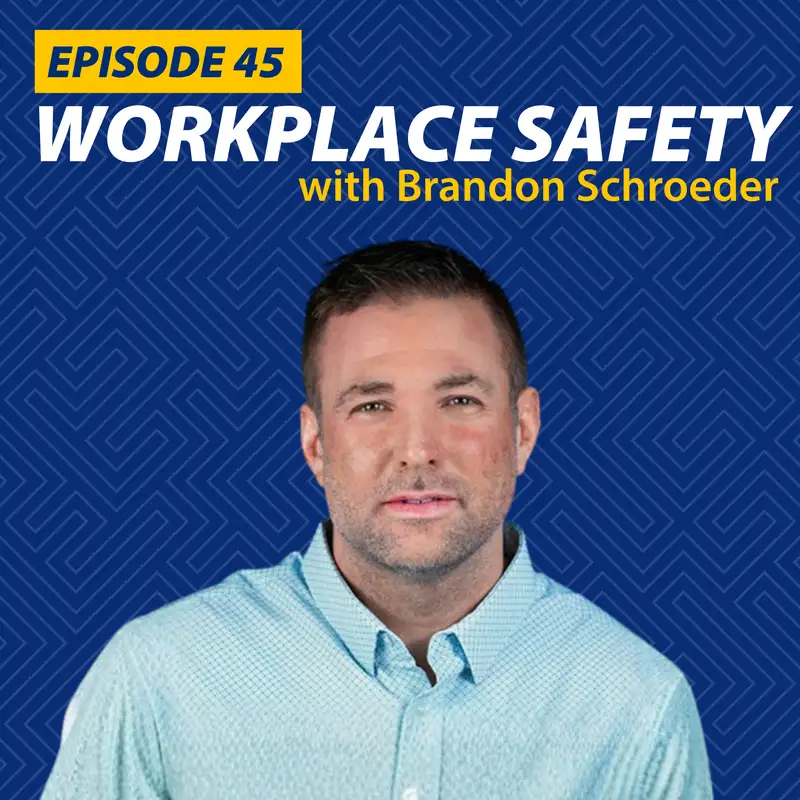
Amy Lasack:Well, welcome everyone. We have a great episode for you today. As many of you know, workplace safety is one of those things that every organization knows is important, but creating that strong safety culture takes more than just policies and checking the right boxes. Each year, Northeast Iowa Community College brings together employers and safety professionals for our annual safety conference. And we are excited this year to join our keynote speaker to The Catalyst, Brandon Schroeder.
Amy Lasack:Brandon is not a career speaker who decided to talk about safety. He's a career tradesman whose life changed forever after a workplace accident in 2011 nearly took his life. For more than a decade, Brandon has stood in front of crews, leaders, and companies of every size with one goal, helping people understand that safety is not just policy compliance or procedures, it is personal. Brandon's message continues to resonate because it's real, relatable and impossible to forget. One decision, real consequences and lasting impact.
Amy Lasack:Welcome,
Brandon Schroeder:Yeah, thanks for having me. I'm excited about this talk today and just learn a little bit more about the event and talk a little bit about me and my story and how I got here.
Amy Lasack:That's great. So as I mentioned earlier, this is year three of the Safety Conference at NICC. It's gonna be held in Peosta at our conference center in Peosta, November 18, 8:00 am to 03:45PM. And if anybody listening wants to check out the details, can find those on our website, which is nicc.edu/safetyconference. And as I mentioned earlier, Brandon is our featured guest speaker for our keynote.
Amy Lasack:And Brandon, before we talk about the accident that changed your life, can you tell us a little bit more about who you were before that day? What kind of work you were doing?
Brandon Schroeder:I was, you know, I grew up in a small town. You know, Lost Nation, Iowa is probably forty minutes from there. And I was a hardworking farm kid. I got done with school. College was not for me.
Brandon Schroeder:My dad said to me, why don't you look at apprenticeships? So I started looking in the trades. I found the electricians and I didn't really think about anything other than I can do that. I can work with my hands. I can learn it.
Brandon Schroeder:I didn't really think about the dangers of it. I just thought I would pick it up and that'd be my career. Decided in about five minutes. And I went down, I applied. It was a very lengthy process, harder than I thought to get in.
Brandon Schroeder:The programs I was looking at. So, I decided to apply in Davenport, Rock Island, and Cedar Rapids and I ended up getting accepted I'm sorry, Des Moines, Rock Island, and Cedar Rapids. I ended up getting accepted into the apprenticeship program in Cedar Rapids. I moved there right out of high school and moved with in with some of my friends and I started my career. The first day, I, you know, I remember thinking, you know, electricity can be dangerous.
Brandon Schroeder:And I was just really trying to be like a sponge and absorb what everyone around me was doing. And, you know, I got in the trade a long time ago. I started in '97 and things have changed and evolved a lot since then.
Amy Lasack:Sure.
Brandon Schroeder:And we did take safety precautions, but it was more just thinking about, you know, this this particular event could be dangerous. We didn't really think about it on a high level or how do we prevent accidents or how do things happen. It was just more like, this is a dangerous task right now. Let's focus on this task, get through this, and the rest of our job when we're going need to think about safety. And you know, that's kind of how I got started and I went through my apprenticeship which was a five year apprenticeship.
Brandon Schroeder:Did great there. I ended up, you know, working my way up through the company ladder. I became a foreman at a young age of around 25, 26. I started running service trucks, small jobs, and eventually started running the larger projects. And I was, you know, I'm not gonna say that I was safety conscious because I definitely wasn't, but I kind of thought safety was for the new person.
Brandon Schroeder:I thought I was a veteran, I knew what I was doing, I was good at my job, and safety I thought was for the new person who had never been on a job site, I'd never had any accidents, Never really seen anyone get hurt other than maybe a cut or some debris in their eye. Accidents, bad accidents didn't really happen. And the things that I was getting away with, you know, maybe standing on top of a ladder didn't seem like it was a big risk or
Brandon Schroeder:Wearing gloves for certain things just because, you know, gloves sometimes you don't have the dexterity. You can't either your hands sweat. They're harder to work in. And and those were just some of the small risks that I was taking. I I always tried to wear safety glasses.
Brandon Schroeder:I didn't always wear my hard hat, things like that.
Brandon Schroeder:And eventually it caught up to me.
Amy Lasack:Yeah. So take us back to that day and just give us a high overview. I know you're gonna talk a little more in-depth for those that come to the conference. We want people to come and hear this whole story, but take us back to that day and and let us know a little bit about what happened.
Brandon Schroeder:Yeah. Was just late in the day, 03:00. I'm done at 03:30 and I get a call and, they needed me to relocate a cord and very routine procedure. It's something I've done many many times. There was a cord running through this aluminum framework.
Brandon Schroeder:All I have to do is relocate the cord and so that the glazers can do their job And normally, would just shut the power off, but there was no way I could do that. The only way I could shut the power off was to call a power company. It's late in the day, it's 03:00. So they started talking about NFPA 70 E around 2008, 2009, and there's a lot of rules in there, and I don't want your viewers to think that this is an electrical presentation because it definitely isn't. But the details on what happened that day are definitely related but all accidents regardless of what you do start the same way.
Brandon Schroeder:It's all about feeling that you're comfortable. You've done it many times and you get complacent and that's exactly what happened to me. I was confident in my abilities. I couldn't shut this power off. Normally, I had the proper PPE in my van but that day, it was not there I decided to proceed without the proper PPE and it nearly cost me my life.
Brandon Schroeder:I was flown to the University of Iowa burn unit by helicopter and I remember thinking, you know, when when they said helicopter, I'm thinking this is it. I'm gonna die right here today, and there's really nothing I can do about it. I was scared. I knew I couldn't go back in time and rewind my decision, but I'm literally thinking there is sand just pouring out of the hourglass right now, and I'm going to die today. And I remember my wife walking in and just looking at me for the first time, and she just started screaming and running out of the room.
Brandon Schroeder:And that's when it hit me. Like, there's consequences for your actions, and there's no redo button. There's no rewind. Right then and there, I had to live with the decision that I made, whether that decision was good, bad, didn't really matter. There was no redos in this, particular situation, and I thought this was the end.
Amy Lasack:You know, when we hear stories like yours, the tendencies to to think about the person that's injured in the workplace, but hearing you talk about the impact on your wife, I'm sure it impacted way more individuals than that, maybe people you were working with, your your other family members. Can you talk a little bit about workplace safety and the impact it really has on those around you?
Brandon Schroeder:Yeah. I remember being in that helicopter ride, and I tried calling the owner of the company. I just wanted to apologize. I wanted to tell him I was sorry, and I dialed the wrong person three times. I couldn't see my phone very well, and I was just trying to get to the right name, and I would scroll up or down and call, up or down and call, and I kept call I probably called five people.
Brandon Schroeder:Nobody knew what was going on, but they knew something was bad wrong. And, you know, when you have an accident like this, it doesn't just affect you and your family. Like, those companies, they have EMR ratings or they have OSHA logs that they have to fill out and when things go bad for a company, it's insurance rates, it's contracts, because construction and every industry used to be different. It used to be if you could provide a good product for your customers, that's all people cared about. But now, I feel like customers are willing to pay for safety.
Brandon Schroeder:And if you can't provide a product, doesn't matter what it is and not get people hurt, People don't want to be associated with dangerous or risky behavior and that really turns a lot of clients off. We did lose contracts in this thing. I remember going to a specific utility company and they had been like a twenty year customer. Because of our new OSHA problems that we had and our accident rate, we had to go through this auditing process and I was asked to go meet with them and this was after my accident about what we were going to do as a company and they didn't know that I was a person that made the decision that caused a lot of these problems. I did everything I could to talk our way through that and explain to them what happened that day.
Brandon Schroeder:But ultimately, we lost the contract and we lost some other contracts. Our insurance rates went up 50% and when those things go happen, there's has to be cuts made at the company and there's a lot of families who depend on a company in order to provide housing, provide, you know, just the quality of life that everyone of us enjoy And those are people I knew. Those were families that I knew. Those were kids that I knew. And that people were going to get laid off because of my decision.
Brandon Schroeder:And I did everything I could to make up for this. They made me safety director after my accident. I'm telling you, I thought about zero from the time I got up in the morning when I opened my eyes until the time I went to bed. I thought about where is there gonna be an accident? What could possibly go wrong today and how can I put myself in the middle of it?
Brandon Schroeder:Making up for my poor decision with zero incidents for an entire calendar year was how I was going to try to make up for my poor decision. I did that for three years and we were able to get it to zero, but I don't think it wasn't anything I did. I had a great support from the company. I had great team of safety people to help me and a great committee. I was just the person who was going out doing what we decided as a company we needed to do because the way that we were doing business safety wise before couldn't continue in the future if we wanted to be a viable client or a viable option for our clients.
Amy Lasack:Why did you feel it was important to turn this life lesson for you into an opportunity to share your story?
Brandon Schroeder:Well, I really didn't wanna talk about this. I never saw myself as a speaker. What happened was we got a serious OSHA violation, and the company asked me to go speak with the OSHA inspector. We were gonna try to get our citation knocked down from serious to other than serious. And I really didn't wanna do this, but I'm bleeding out of everywhere.
Brandon Schroeder:My ears are bandaged up, my hands, my arms, my legs are bandaged up, and I'm gonna go look this guy in the face and I'm gonna say, sir, that was not a serious accident. I just remember thinking this is a complete waste of time. And I went in there and he agreed to knock our citation down from serious to other than serious. I just remember thinking, I just won the Super Bowl. I was so pumped and I was like, I did it.
Brandon Schroeder:Mission accomplished. We got what we needed to happen here. This is all going to work out. Before I walked out of that room, there was a gentleman from Master Builders of Iowa there. He said to me, would you be willing to present and talk at the MBI Safety Conference?
Brandon Schroeder:And I'm thinking, you know, what what do you want me to say? Blew myself up, broke all the safety rules or word a break, nearly killed myself. I don't know what you want me to say. And I kinda got volunteered into that first one and I remember going home. I didn't even know what it was and I went home and googled it and and I saw they're much larger than that now but at the time, they were going to, I think this is in 2012.
Brandon Schroeder:They were going to have around 500 attendees and I had never spoken to 500 people in my life. I had no idea what I was gonna say. I didn't even know what PowerPoint was. I barely knew how to send an email. Like my computer skills were zero.
Brandon Schroeder:And they put together a few slides for me and said, go home and try to practice. Every time I looked at that first slide, I was back there in front of that transformer rolling on the ground, wonddering if I was on fire, flying in that helicopter thinking I was going to die that day. And I couldn't practice the presentation. So I went there and they had to drive me. I was too scared.
Brandon Schroeder:You know, I was just terrified. And I found out I had a breakout session. This is the first I knew. I didn't know what that was. I thought I was going to speak in front of 500 people but 10 people signed up for my class and I had this closet of a room and I was like, I could do this.
Brandon Schroeder:I did that first presentation and another guy came up to me from Halverson Train and he said, that was a very powerful presentation, would you be willing to present and talk to three of my groups? And I remember thinking, I don't know what he is talking about. I was not good. I was sitting in that chair just a mess, trying to just every ounce of everything I had to try to hold it together so I could make it out of that room and just get to my car and never talk about that day again.
Brandon Schroeder:And I handed him my card and I couldn't really talk. And I thought that's the end of it. I'm never talking about that day again and I got home and he wrote a one page email asking me to talk about my accident. So, he said a lot of good things and I just couldn't tell somebody no especially after he took the time to write that.
Brandon Schroeder:Alright. I can do it again. So, I did it and again, it didn't go well. Second one, it went better but I still went to my car and it just ripped me apart because I'm remembering all the pain, every ounce of emotion that I felt that day. The, you know, I thought I was going to lose my hand.
Brandon Schroeder:My face was blown off. You know, I had a brand new baby at home. I'm just remembering all of this and I had just gotten through it and I wanted to put it behind me then I had to go do it again and I made it to my car and the eruption happened there. Then the third one, I finally called my wife and she's like, you have to stop, this is destroying you. But I just decided that if I can help one person do this, then I'll continue. I still had no idea that I was going to be a professional speaker.
Brandon Schroeder:Like, I didn't even know what that was. So, I went back to my job of being safety person and eventually, another role came up where I was working in an apprenticeship and training instructor and I would use all my vacation to go do these speaking events and I did that for another three years but as you may know, coming from the educational industry, like if you aren't at class one day to teach a class, it's very hard to find someone to fill in and for someone to take that workload. And I felt a lot of pressure that I needed to be at school for those apprentices and I just didn't like going in there asking every time and more and more opportunities started to come up. I was using all of my vacation for about three years to do speaking events and eventually, I just had to make a decision. Am I going to be a speaker or am I going to work here?
Brandon Schroeder:Because this isn't working out. And I ended up getting this opportunity to go down and speak for Duvall Safety. They're out of Buffalo, New York and they asked me to come down to Houston and I told my boss about it and he pretty much said no. And you know, I followed Dave Ramsey since I was 18 and I was doing Dave Ramsey before I even knew who Dave Ramsey was and I thought, you know what? This is why I was saved.
Brandon Schroeder:This is why I drove crap cars. This is why I sacrificed. If I don't, I can go two years with no paycheck. I'm not going to like it. But I can do it.
Brandon Schroeder:And I just decided I'm going to quit my job. I'm going to go down there. I'm going to go for this. And I went down there. I gave the presentation.
Brandon Schroeder:This guy had helped a lot of big name speakers and he didn't even show up. He just videotaped it. And I'm like, well, he's gonna call me tomorrow for sure. Oh, two weeks go by. I don't hear anything from this guy and I'm thinking, I quit my job to go down there.
Brandon Schroeder:What am I doing? And finally, he called me and he said, I need you to come out to Buffalo. I need you to bring your wife. I want to meet with you. So then I get all excited and I'm thinking I'm going to get all these speaking engagements.
Brandon Schroeder:I'm going to do videos. This is going to be great. I'm going to be just like Charlie Moorcraft. He's the kind of the pioneer of doing what I do. And he brought me out to Buffalo and ripped me apart for four hours on my one hour presentation.
Brandon Schroeder:Told me it was too graphic. I didn't have a message. I needed some structure and he left me with four pages of notes. So I went home. I worked on this thing.
Brandon Schroeder:I rewrote the presentation until I checked off every single suggestion that he gave me. And then I videotaped it. And I did it again and again and again. And I don't know if you've ever while you're videotaping this, but I wouldn't anytime I messed up, and I was usually messing up within the first three sentences, I would have to start again. Sometimes I would go twenty minutes in, and I would mess up one word, and then I would have to start again.
Brandon Schroeder:And I did it again and again and again and finally and I'm just recording it from my computer. It wasn't like I had any way to edit this. And I sent it to him and I finally got something I liked and I sent it to him. And he said you nailed it. He started taking me to all the big safety shows.
Brandon Schroeder:We went to the NSC. We went to the VPPAs. We went to the ASSPs and I just started doing breakout sessions but in these breakout sessions, I would get one or 200 people and those people would hire me. Well, they became his clients since he brought me there.
Brandon Schroeder:And I did that for the first year and the second year, I said, you know what? I thank you for all you've done for me. I did this for a year. You know, you've gotten your payback on what you did for me but I have to do this on my own now. And I started applying to every single safety conference that you can find in the country. Well, when you don't have a CSP and nobody knows who you are, it's very difficult to get accepted into these safety conferences.
Brandon Schroeder:But I just kept trying and I kept sending out all of these proposals. That first year I ended up doing 70 events and every single time that I would get one of these breakout sessions, I'd get two or three bookings. And that's how I kind of got started and you know, that I started speaking nationwide in 2018, I did around 70 events. 2019, I got that up to 90 events. 2020 was going to be my year.
Brandon Schroeder:I was booked solid. I still don't have bookings like I had in 2020 and then COVID hit and shut me down. I went back to work as an electrician. I still had a good year doing virtual events and videos but I really don't like doing those. I like to be in front of people. The much better way to communicate and 2022, things picked up. I think I did around 70 or 80 events again. And last year was my banner year. I think I did 120 events.
Brandon Schroeder:I've spoken in 48 states all around the country and only states I haven't been to for speaking are Alaska and Hawaii and I've gotten inquiries for both but it's just it's hard to travel in and out of there in one day. Sure. So, they're not really desirable places for me to go. But being able to bring this home to my home state, you know, less than an hour from where I live, speak to people who are just like me. This is a very exciting opportunity and I'm very excited to be part of it.
Amy Lasack:Yeah, it's very interesting to listen to your journey through this because it sounds like at the beginning you were working through all the emotions that you still had from the accident, but then also understanding that you wanted to make some impact on helping other people and overcoming that adversity to making that change. That's really interesting. I appreciate you sharing that. What have you learned about yourself since starting this speaking experience?
Brandon Schroeder:I would say that being able to do what I do and there's there's a lot of people that get injured and a lot of there's no shortage of people who want to get in front of people and talk. What I've learned about me and I didn't really realize it. People tell me I'm very good at storytelling. And when I started speaking, I knew I could tell a story. But I knew I didn't have the skills.
Brandon Schroeder:I didn't know what to do with my hands. I didn't know about voice fluctuation. I didn't know how to command an audience, how to become a presence up there that people wanna listen to and they can't turn their head away for one second or they're worried they're gonna miss something. And that's what I strive to be. So what I tried to do is I never went to college, I never spent one day there, but I watched YouTube videos of very good speakers and I would write down five things.
Brandon Schroeder:I watched 20 of them and I'd watch write down five things that they thought they did well that I thought I did poorly. And the next time I would go on stage, I would try to implement those things. I would try to implement those things and I kept doing that and kept doing that and I would just steal one thing from 20 different speakers that they did, that I thought they did well for their stage presence. I mean, Robbins, I've watched him tons of times and I'm not ever saying I'm gonna be Tony Robbins but I picked up a ton from watching that guy. Charlie Moorcraft, I picked up a ton from watching him.
Brandon Schroeder:Even my pastor at church, like I would watch what he would do with his hands and his natural movements, and I just started to emulate those things. And after you do it time and time again, it just becomes who you are. Now, when I go up there, I don't think about anything. It just happens but it took me a long time to get to that point.
Amy Lasack:Yeah. So, it's interesting listening to you talk to about just doing something repetitively and I'm thinking about safety and watching other people and doing the types of things they need to do and about companies, right, and creating a culture of safety. And I'm sure it sounds like you did that in your safety role after your accident. So, if a company is listening to this and they want to improve their safety culture, do you have a a recommendation? What's one thing they can do?
Brandon Schroeder:I don't know if I can just say one thing. If anybody had the one magic pill, we wouldn't be here. But I think the buy in from the person at the top, the manager, the CEO, the person that writes checks, whoever the top guy is where the buck stops there, they really have to believe in safety. They have to put people in appropriate roles. Too many times we put the most productive person in charge of a crew and think that we're going to multiply that out what their abilities are through the rest of the people, and I'm not saying that that doesn't happen, but that person who is put in charge of a crew, which is exactly what I was that day, they have to believe in safety.
Brandon Schroeder:They have to know that things can go wrong. They have to realize that if they don't plan safety in their job, no matter how many times you've done it, eventually something is going to go wrong. Somebody's going to make a wrong turn somewhere and really engineer the hazard out. Think about the hierarchy of risk controls and I believe that all accidents are avoidable with proper planning. But you can't just put the most productive person in the company in charge of a bunch of people and just think about production numbers. It has to be production.
Brandon Schroeder:Yes, we all have to make a paycheck. We all have to be productive. And if we don't make someone money, none of us have a job and I can't dispute that. But with proper planning, I think you can be productive, just as productive, and do it safely at the same time.
Amy Lasack:Well, Brandon, thank you so much for joining us. I'm looking forward to hearing a little bit more of your story at our upcoming Safety Conference. It's a powerful message that you're sharing and we appreciate you sharing the personalness of what you've gone through as well.
Brandon Schroeder:Well, I'm excited to be there. You know, anytime I don't have to get on an airplane, especially the way air travel is going this day, but right now, I go over a 100 flights a year and that day, I will just get to drive there from my house. So, this is a great it's fun for me to do this in Iowa. It doesn't happen very often, probably only one or two times a year and I'm just excited to be part of this.
Amy Lasack:Well, great. Well, we're glad you're still here with us. That sounds like a very scary experience, but you've turned it into an opportunity to help others think differently about the choices they make. Thank you very much for joining us today and thank you for coming to our Safety Conference.
Brandon Schroeder:Sounds good.
Amy Lasack:And if you're listening and you have interest in checking out the full conference, you can visit our website, nicc.edu/safety-conference. Thank you everyone for listening, and thanks for joining us for another episode of The Catalyst. We will see you next time.
Amy Lasack:Thanks for joining us on this episode of The Catalyst. If you enjoyed the conversation, make sure to follow or subscribe on your favorite podcast platform so you never miss an episode. Want to learn more about NICC and the many ways we support our students, partners, and community? Visit nicc.edu for more resources and upcoming opportunities. This podcast is produced by Northeast Iowa Community College and hosted by me, Amy Lasack, with executive producer, Tessa Hill, producer, Travis Hunt, and graphic designer, Ashley Konzen.