00:00:00:00 - 00:00:34:14
Welcome to The Catalyst, an exciting and insightful podcast produced by Northeast Iowa Community College. I'm your host, Amy Lasack. Together, we'll explore the people, programs, and partnerships that make Northeast Iowa Community College unique. From student success stories to behind the scenes info about athletics, innovation and industry collaboration. Each episode dives deeper into your community's college. Get ready for an inside look at the impact of community driven education at NICC.
00:00:34:16 - 00:00:55:27
Well hello everyone! I have two fantastic guests today, and I want you to think about whenever you flip on a light switch or you drive a car, or you step into a building, you come by in a cornfield, you're benefiting from the education of the students that our two guests oversee their programs. So today we welcome two of our deans at Northeast Iowa Community College.
00:00:55:27 - 00:01:21:18
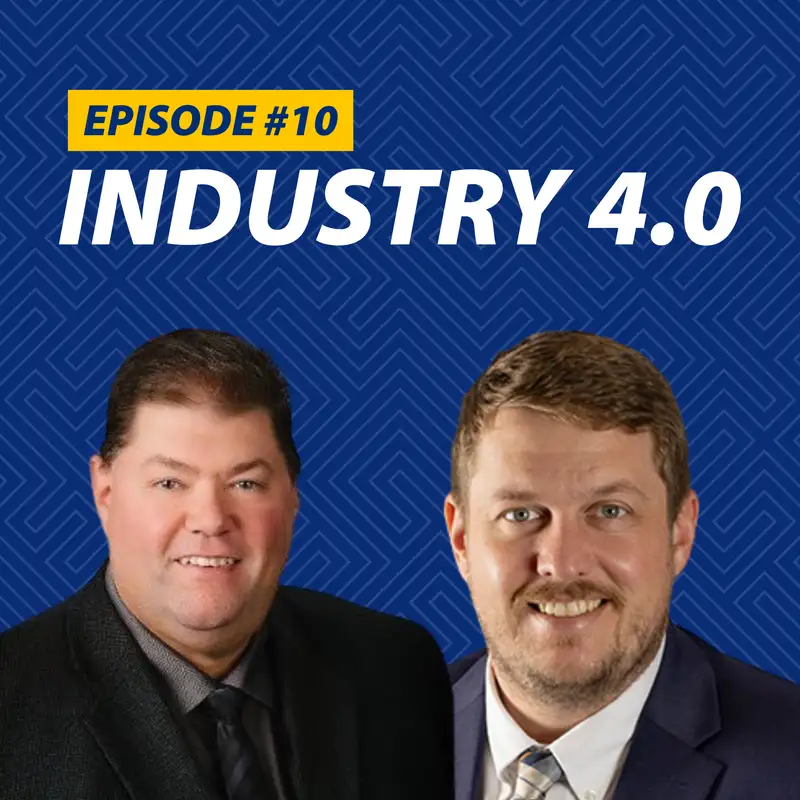
We have Mark Gerein, dean of power, mechanics, energy and construction, and Greg Moklestad, dean of advanced manufacturing, computer science and agriculture. Welcome to both of you. Thanks, Amy. Yeah. Thank you for having us. Yeah. So let's start first by you describing what programs are underneath each of you. So Mark, what does dean of power, mechanics, Energy and Construction oversee?
00:01:21:20 - 00:01:50:01
Okay, so basically I overlook all of the under the power mechanics side. I have the John Deere tech program and the Calmardistrict. I also have auto in both districts in diesel impasto, under energy. I've got basically the electrical program, which is a two year degree program at Calmar. And then I also have a Hvac gas utilities program in Peosta.
00:01:50:03 - 00:02:19:27
And then construction is primarily a carpenter and business construction management, which is operating out of Calmar as well. Right. And, Greg, what about you for dean of advanced manufacturing, computer science and Agriculture? Yeah. So, advanced manufacturing is our industrial maintenance and industrial automation and mechatronics programs. Our engineering technology program, our CNC machinist program, and our welding programs.
00:02:20:00 - 00:02:46:28
And then, on the computer science, I, have, all of our computer programs on our North and South campus where we have a lot of networking focus, and we also have a programing focus on our campus. And then, up at our Calmar campus, we have, all of our ag programs. So everything from your animal sciences to, agronomy and sciences.
00:02:47:01 - 00:03:07:10
Yeah. Lots of different areas you both cover and, and I know recently we had an open house at our pasta campus for our advanced technology center. Tell us more about that. And why was there a need for renovation at the, Advanced Technology Center?
00:03:07:13 - 00:03:33:08
Well, I'll go first. This is really Greg's, dream come true, honestly. But, it's really opening up to, I think, the future of what our college needs to deliver for our community. Industry folks. The advanced, technology center, we renamed it, that for that very reason, to give it a new, fresh look.
00:03:33:10 - 00:04:10:16
We have we've always had a really good industrial maintenance program. We expanded that a couple of years ago into more automation. So our automation and mechatronics programs and just to, basically really focus on those key areas, we needed more space. And so Greg really came up with the vision of, pretty much gutting our first floor, or our second floor, I should say, in the industrial tech, we what used to be the industrial tech building and come up with really what is there today, which is a state of the art facility.
00:04:10:18 - 00:04:41:03
I'll let Greg describe everything that he's done in that that space. Yeah. Because, Greg, it looks completely different than what it looked like before. Yeah. Mark. Hit it there. Where? Right now, technology is changing. So fast. And, as we are adopting technology, we were just, running tight on space. And after scouring across the campuses, we, work together as, many teams across this college.
00:04:41:03 - 00:05:04:13
And that's how we came up with the idea to remodel the, floor of our advanced technology center now. And one of the, neat things we did with our new lab is that we, visited multiple colleges, across the upper Midwest here to, get a good sense of what best practices are for a, forward thinking lab.
00:05:04:13 - 00:05:31:26
And I think it's a good start. And, we are also set up infrastructure wise for future technologies as they come in that space. So, Greg, what are you hearing from students about the renovation? Well, I think the student aspect, has been, pretty positive. One of my favorite things is, whenever I visited the lab, you can see, out from the lab as well as in from the lab.
00:05:31:26 - 00:05:55:25
And when you look out, there is routinely students that are not even a part of the program walking by the windows, looking and so I think a lot of our students realize there and, future and, positive new, exciting space and, where there's a lot of, cutting edge careers, in the future for them. Yeah.
00:05:55:25 - 00:06:22:14
You talk about exposure to and Mark, I've heard this from you multiple times about making manufacturing sexy again, and that's the exposure of manufacturing. So what have you heard from employers about the the new lab? Well, you know, the open house was, really a whirlwind of activity. And, I talked to a number of employers there that are key to our success.
00:06:22:16 - 00:06:41:23
A lot of them are on our advisory committees, etc.. And they really love the space, but, I think the bigger impact for me was some of the employers that have come through, and we've shown them, you know, kind of one on one where you have a little more time than an open house. And they love it.
00:06:41:23 - 00:07:03:13
They see the potential there. They're really excited about it. And, I even just kind of build off of that a little bit, too. We had students, like, former students come through, at our open house, and I had the opportunity to visit with them, and they were just really shock and awe in terms of what, what we had.
00:07:03:15 - 00:07:27:20
They loved it. And, I think from a business perspective, this really opens the door, to more, focused training that they're going to need to upskill their employees in the future as well. And that that space and the way we've got it laid out, I think really opened that door to us being able to do that for the future.
00:07:27:22 - 00:07:48:02
Yeah. And maybe a little jealous when they came through and saw the new space and wishing that they might have had that when they were here. I know when I go on college tours with my kiddos, I'm like, gosh, I would have been nice to have. I went to college. So let's talk a little bit about the role NICC does play with business and industry.
00:07:48:04 - 00:08:20:02
Mark, do you want to talk a little bit about what you're seeing when business and industry have needs and how NICC can kind of plug those needs? I think really what they're struggling with, as everybody is, in the industry, is, is just the people aspect of it. And, and the labor workforce is, is down right now and having the quality people, to be able to run your, your industry is, is a challenge for everybody right now.
00:08:20:04 - 00:08:55:05
So industry is really looking to how do I how do I get more efficient, with my workforce and that that comes with technology. But the flip side of that is that technology needs to be maintained, it needs to be looked after, and operators need to also know how to operate this new equipment. And so I think what this kind of sets us up for, not just now, but into the future, is, is being able to get in front of what's coming with, with the future technology.
00:08:55:08 - 00:09:22:13
Where we're in many respects have been catching up. We're at the point now where I think we're in a good spot to be able to offer a lot of different programs, not just with our credit programs, but also through our noncredit side and and contract training. And I envision this as being able to do this all in the same space, and at the same time, you know, during the day, debt throughout the day or into the evenings or whatever.
00:09:22:13 - 00:09:59:11
So, I think we're set up really well to be able to do that. Yeah. Greg, I hear you talk about flexibility in that. That is such a need for this particular area for students. Oh, yeah. Well, the flexibility is a big part of, why we design the lab the way we did right now, your traditional classroom structure, which has been, changing in the past decade to more of a hybrid format, is also continuing to evolve to, fit with, a work life balance.
00:09:59:11 - 00:10:30:03
So a lot of our students are working outside of taking classes or having family or other commitments and having, a space where we can actually modify your educational pathway, whether that's Noncredit, apprenticeship, RTI, or even credit. Through our CB programing, we should be able to meet most of our student and business partner needs for those learning skills.
00:10:30:03 - 00:10:54:24
So having that flexible environment, is just a piece of the whole team that goes into the flexibility that it takes. So you used an acronym that we use a lot in education that folks might not be familiar with CTE. Can you talk a little bit about what that means and how this whole new lab concept fits into CPE?
00:10:54:26 - 00:11:24:21
Yeah. So I, so, the CV means competency based education and knowing that most people don't know what that really means, that is okay. And the nice thing is, is in a lot of our advanced manufacturing and especially our industrial technologies, we've actually been teaching in a competency based model for many decades. And that's why, I'm going to do my usual description of shop class.
00:11:24:21 - 00:11:49:16
Like, a lot of, generations have experienced a shop class or woodshop class for a real good example is the teacher gives, a whole group of 20, 30 students, a project, whether it's a cutting board, a stool, or a chair. And you have to learn how to use, a whole bunch of different tools in order to accomplish that end product.
00:11:49:18 - 00:12:16:13
And, and the industrial technologies we have been teaching in that way for a long time. And that's why competency based, we already do a little bit of it. And now we're adding the flexibility. So in that shop, for example, no school has 20 table saws or 20 routers to accomplish a project, but some house you still get 20 students, through that project all around the same time.
00:12:16:13 - 00:12:43:27
And that's, kind of the goal with our CBA is we are taking some of those, traditional modalities of a lab environment and modifying it for our college and academic programing. That's pretty cool. And, Mark, from an employer standpoint, I have to believe that CBA is huge for them. Well, I think so. We've talked about it at our advisory groups.
00:12:44:00 - 00:13:14:14
On a number of different occasions. And I think the biggest thing that it offers them is, not just the flexibility that, you know, we have a number of students who are currently employed and sponsored by those employers. It gives them the flexibility to to work. But I think the biggest thing, too is, with competency based, students master their skills so they master competency as they roll through the program.
00:13:14:16 - 00:13:40:16
And that is something that an employer can take to the bank, basically knowing with confidence that, that individual who who works for them has the skill set that they've, they've covered it and have done it and mastered that skill to be able to take with them to the workforce. Yeah, huge. And a lot of times employers and hire somebody that is very strong in certain areas that needs a little help in certain areas too.
00:13:40:16 - 00:14:04:24
And they can utilize the lab as a follow up to to fill that gap. Yeah, exactly. And I think, I mentioned it earlier, you know, we we have the opportunity to do focus training for industries as they need it. And, in this ever changing world, I mean, it's, with technology coming, that's going to be more and more as we move forward.
00:14:04:24 - 00:14:31:15
And so, employers aren't going to have the ability to just do all this on their own. And so they can look to us to, to help upskill their employees as they as they move into a new technology, whether it be, you know, robotics center, robots, whatever the case may be, they, they can upskill employees as they develop in their careers and, and we'll, we'll be there for that.
00:14:31:15 - 00:15:01:09
Right? So, yes, so many changing technologies in the areas you both oversee. How do you, question for both you how do you keep up? Your faculty to make sure that they have the, the newest and understanding of what's happening within business and industry and providing them with what they need. Yeah. So a lot of our faculty, come from industry, from all different periods of time.
00:15:01:11 - 00:15:40:22
And, as, Mark and I have been talking, the industry has been changing, very rapidly in the past, decades. So with, technological change, you cannot even have ten years of experience for or even, 20 or 3 in some cases. So, we are actively, getting professional development for our faculty. Like, recently, we've been adopting more into Fanuc robotics, and, we've been, professionally training our faculty to, teach students for future years.
00:15:40:22 - 00:15:44:27
And we're going to have to keep doing that.
00:15:44:29 - 00:16:07:22
Okay. And I know you have a really great set of faculty under both of you. Very dedicated, passionate for the students. I think the one thing that's common amongst community colleges is that the individuals that work within your areas can make a lot more money not teaching, going out and actually doing the trade that they're in, but they teach because they're passionate about that.
00:16:07:22 - 00:16:12:09
Can you talk a little bit about your faculty?
00:16:12:11 - 00:16:54:03
Well, I think you pretty much summed it up. I think most of our faculty have that passion to pass on what they've learned through, through their career in industry. And, and they take pride in being able to, get that through to students as they progress in their careers. You know, there's, you know, there is a benefit, I think, to faculty because it's, it's a little slower paced than it would be in industry because you're teaching, and, you know, you go as fast as your students can, can learn the, the content.
00:16:54:03 - 00:17:19:06
So I think there's an advantage to that. But I think more than anything, for most of them, it's it's really being able to pass on what they've had the opportunity to gain and learn through their careers and, pay it forward, if you will, to their students. Yeah. A real, real difference makers faculty are.
00:17:19:08 - 00:17:51:03
And Greg, one of the terms that a lot of conversations within this area involve industry or manufacturing. 4.0 can you, can you summarize what exactly that means. Yeah. So industry 4.0 is the fourth industrial revolution. Right now we are. And time period where technology has been, really, taking off. But it's all becoming interconnected.
00:17:51:03 - 00:18:24:08
So a lot of the technology has already existed for many years, but now we've reached a point where everything is starting to work together. So in the fourth industrial Revolution, that is that interconnectedness. So that is everything from, data to robotics and automation to even simulating doing a task before accomplishing it, cloud computing and then a real getting on the scene right now is the Internet of things.
00:18:24:08 - 00:18:55:19
And then you when you have that interconnectedness, it can get shut down pretty fast. So cyber security is a part of that too. So, as a part of this, fourth industrial revolution, a lot of businesses are starting to cross integrate their, different, fields. So then they can work even more efficient in the workplace. So we have been, looking at our programing and how can we best set up our students to, work in that cross-disciplinary environment?
00:18:55:19 - 00:19:23:19
So we have been actively going through our programing, doing, business and industry leadership teams to, make sure that the skills are aligning with these, new careers that are unfolding, every year. Yeah. That's great. You mentioned the built process, which, Mark, I know you've done several of those with the college. Can you talk about the business and industry leadership teams and what what does that accomplish?
00:19:23:21 - 00:19:54:21
Well, what we've what we've done with, with the business and industry leadership teams is, is it's really an extension of our advisory groups where, we actually consider industry members to work, for a short period of time. And what we do is we take all of our, learning objectives in a program and we'll add in anything that we think could be relevant to a future change or add to a program.
00:19:54:23 - 00:20:20:09
And we'll have industry rank all of those learning objectives. As to how that particular learning objective, what it means to them and their, their place of business. And so when you have, you know, 7 or 8 or 10 or 15 different industries in your, in your, in your group, they have a variety of different, perspectives on what's important and what's less important.
00:20:20:12 - 00:20:46:07
And that all comes out when we rank these, these learning objectives and what we'd like to see is we'd like to see, you know, fairly high scores on all of them. But that's not realistic. There's going to be areas that, you know, just don't. They're not that important to, certain industries. And now they might be a stepping stone to more content that we have to cover.
00:20:46:09 - 00:21:06:19
That is important to industry, but it gives us the capability to look back at our curriculum, like deep dive into the curriculum and really look at what's important and what we need to spend more time on and what we need to spend less time on, and maybe what we need to, add or actually take out of the program.
00:21:06:19 - 00:21:30:05
And so we've been pretty successful at re revamping a number of programs doing that. I'll use the example of our, industrial automation and mechatronics program. So we did that probably three years ago now I think, where we brought that in, we went it ran us through the belt process to make sure that we were hitting the mark.
00:21:30:08 - 00:21:57:01
And so that that, along with our industrial maintenance program, gives students the option of kind of a two degree path. And it was all done through the bill process. And, I think industry gets engaged in it. And the biggest, the biggest thing about it is when you look at the results, we talk about it and we try and draw out why, why the results are what they are like.
00:21:57:01 - 00:22:22:02
Why did why did this particular item maybe score a little bit lower than, than we thought? Or why is this very important to you? And we'll get, you know, the real roots that relate to what they're looking at. It gets our industry members engaged in the program and really telling us what we do. And then if at the end of it, we always ask, well, what are we missing?
00:22:22:05 - 00:22:40:04
And we usually get 1 or 2 nuggets there that we didn't cover. And then we start thinking about, well, how do we how do we add that into the program as well. So I think it's been pretty successful. We don't overdo it. We try and we try and do it and refresh it every 3 or 4 years.
00:22:40:04 - 00:23:01:16
So, there'll be more coming. You know, it's kind of a regular piece of a number of our programs now. So, yeah, I think the one thing I'm hearing from both of you is how important industry involvement is to the success of your programs. And you mentioned one of you mentioned advisory committees as a big part of that.
00:23:01:16 - 00:23:26:07
Can you talk a little bit about what those are? And if a company is not already part of an advisory committee or involved with NICC in any way, what can they do next? What are their next steps? If they want to be involved? So advisory committee is are, a staple piece of all TEC programing across the United States.
00:23:26:10 - 00:23:51:21
And, you know, every program that Mark and I shared that we're over has advisory group of, our local community because as a community college, we serve that community. And, in order to train, students to, work in that same community, we have to talk to the community. And, we're only as strong as, community involvement.
00:23:51:25 - 00:24:23:03
So that's where the advisory comes in. So it for example, in the advanced manufacturing fields that I talked about and Mark talked about earlier with industrial maintenance. Right. We got a group of area employers and they come in they come from either management H.R employees and they will discuss what's, new and relevant in their fields because we want to serve the that same community piece.
00:24:23:08 - 00:24:59:19
And, for all of our other programs, whether it's Hvac or diesel or gas utilities, you just reach out to the community college, or you can even reach out to Mark and I, and, we'll get you on those teams so you can help us make the best programing possible for our area. Yeah, definitely. And then we will take any and all, in terms of advisors, because we're there, we we've got a good core group on many of our programs.
00:24:59:19 - 00:25:24:05
Others we could use more, to be, to be honest. And, so we would we'll take anybody. We don't turn anybody away. So, yeah, if anybody's listening in is wants to be part of that, just reach out to us. It's nice to to to be able to those students like you go through these this program here are all the employers that are invested and what you're learning.
00:25:24:08 - 00:25:36:24
They provided input. They understand at the end of your program what you're going to know. So that is that is a nice piece of it is connecting the student to the employer.
00:25:36:26 - 00:26:05:29
I know we recently received great news at the college, about a new grant, that we receive that will help us with that CB, piece that we talked about a little while ago. Can you talk about that, Greg? Yeah. So, we recently got awarded a National Science Foundation grants on NSF grant. It is $454,000. It'll be over in the next three years.
00:26:06:01 - 00:26:47:18
And the goal of that grant is to, work on our competency based education that I was talking about earlier. And the goal of working on that competency based education is to create that flexibility that was talked about earlier as well. And, allowing our, rural and veteran populations to have a greater access to, these exciting academic programs because we cover, a large area here in northeast Iowa takes, almost two hours to get between the two campuses.
00:26:47:18 - 00:27:18:03
So, one of the ways we can meet our community is by having that competency based education. So with that grant, working on the competency piece, we will be able to grow our coaching and curriculum in such a way where students can work with our future CV coaches to, maybe have 2 or 3 big days of, work on campus.
00:27:18:03 - 00:27:59:19
And then, that way you can, work the rest of the week and then you're not driving, as many days of the week, we have students that commute an hour to campus. If you if we can lower the amount of times you have to travel to campus and still meet that same academic rigor that is, vital to serving our rural populations, and then the veteran piece of the competency based education is when you go through the military, depends on your job, you might already have gotten training and skills that might not have the same credentials that the academic institutions have.
00:27:59:19 - 00:28:39:15
So with the competency based education, working with our entire team, whether it's, instructors, our CBT coaches or even, the deans, we should be able to, help, assess how much you've learned and get you in an appropriate spot of that program so you can finish it in an even more timely manner than before. So serving those needs, most of the money will be going towards that professional development, because the CBT model that we teaching in that framework, it's an entire ecosystem.
00:28:39:15 - 00:29:04:17
We need to support our students to get to that competency point of, it's like a B or higher, and we want to be able to circle the wagons around you to make sure you are successful in getting what you are paying for. And same for the employers that you know that the product that is coming out of this college is, well learned.
00:29:04:19 - 00:29:29:18
Student. So, all right, that requires a lot of professional development and looking at best practices. And, the grant covers a lot of those activities. Right. And I love that you're building in the coach piece of it, too, because that that certainly helps the student get guided through the process and doesn't leave them feeling not sure where to go next because it is a different way of learning.
00:29:29:21 - 00:29:48:14
And Mark, I imagine from the employer standpoint, we hear all the time from employers that they're wanting folks to to work. Can what can we do at NAC to help them get more employees? This ability to flex things so that they can learn and then on the other day is going to work, is going to be huge for employers.
00:29:48:17 - 00:30:18:01
100%. Yeah. I think that's, the biggest thing we've, with, with the CV model that we're looking at, and we're really already doing it in many areas. It does give, our students the opportunity to, cover their, their education when they can and work at the same time so that that benefits, them as well as the companies.
00:30:18:03 - 00:30:41:11
It you know, I mentioned we have a number of industry members that actually sponsor employees to come to school as well. So that offers that flexibility. Plus it, you know, down the road, I think, and we do we do it now, but I think it'll grow in terms of just being able to upskill employees.
00:30:41:13 - 00:31:14:16
One thing you know, that we will be doing as we go through this CBA journey is more of a micro credential type of approach where we will be, adding smaller chunks of learning. Right. Same content, you know, as, as we're doing today, but in smaller chunks. And, that will be advantageous for industry because they'll be able to come in and almost pick content l'attaque that they need for their employees.
00:31:14:19 - 00:31:36:20
And, and set up, you know, a specific training tailored to their needs. Customer engagement. Yeah, yeah. Name of the game customization. So if a student is out there or if an employer is out there, could I have each of you give us your email addresses? Mark, we'll start with you. So yeah, it's my last name.
00:31:36:22 - 00:32:02:23
G E R E I N, M as in Mark. And NICC, great. And Greg. Yeah. And then same for me. And it is my last name, M O K L E S T A D. And then, G for Greg at nicc.edu. Fantastic. And it's clear that the work that you do, you're very passionate about it. You're making a difference in student lives.
00:32:02:23 - 00:32:21:23
Your faculty are making a difference. You're impacting the local economy and workforce. So thank you for all that you do. Great discussion today. So again, thank you to Mark. Aaron and Greg did our two deans at NICC. And thank you for sharing your insights. And thank you everybody that has been listening.
00:32:21:23 - 00:32:53:08
Thanks for joining us on this episode of The Catalyst. If you enjoyed the conversation, make sure to follow or subscribe on your favorite podcast platform so you never miss an episode. Want to learn more about NICCand the many ways we support our students, partners, and community? Visit nicc.edu for more resources and upcoming opportunities. This podcast is produced by Northeast Iowa Community College and hosted by me, Amy Lasack, with executive producer Tessa Hill, producer Travis Hunt, and graphic designer Ashley Konzen.