00:00:00:00 - 00:00:36:09
Welcome to The Catalyst, an exciting and insightful podcast produced by Northeast Iowa Community College. I'm your host, Amy Lasack. Together, we'll explore the people, programs, and partnerships that make Northeast Iowa Community College unique. From student success stories to behind the scenes info about athletics, innovation and industry collaboration. Each episode dives deeper into your community's college. Get ready for an inside look at the impact of community driven education at NICC.
00:00:36:11 - 00:00:59:15
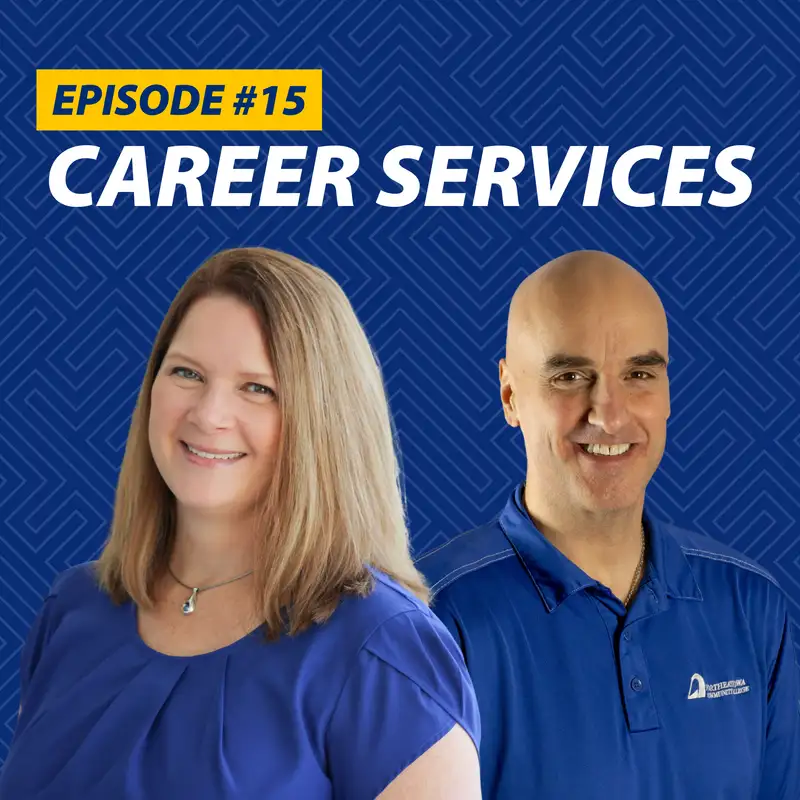
Hello and welcome to another episode of The Catalyst. Today's episode features our fantastic career services team and a discussion about career development, workforce needs, vital role employer partnerships, and how all of that plays and, preparing our students for meaningful employment. This is an important conversation for both students and employers, so we're glad you're here listening to us.
00:00:59:18 - 00:01:24:17
I do want to welcome our two guests today, Chris Entringer, which, he is our career services manager, an academic advisor. He has been, with us for 29 years working in this realm. And Joni Knopp, is, academic advisor, eight years at NICCproviding advising services for our students. So welcome to both of you. Thanks. Thanks for having us.
00:01:24:19 - 00:01:43:10
Yeah. So let's maybe just start with the very basics. Chris, we'll start with you. When somebody hears about a college and their career services department, what exactly does that mean? Well, for NICC, I think it's always been about the personal touch. I think we do a good job of college wide. I think it's a great place to be for that.
00:01:43:13 - 00:01:58:02
I remember when I was and I attended other colleges and universities, which are great. I remember when I came to NICC, I just I knew that it was that, that personal touch. So I think we do a great job of that. You know, just getting the students to us. And once they're with with us, I think we do a great job.
00:01:58:02 - 00:02:23:21
And it's nice to partner with Joni. We're we're all in common. So we're all in one area. We're we're we just think of ourselves as a one stop shop. So it's nice to have that collaboration with other offices. And we're certainly not often off in a corner somewhere. Career services really ingrained into the college with academics are noncredit side with with advising, you know, all the areas we work really closely and we're small.
00:02:23:21 - 00:02:42:02
It's nice to where Sloan is that we can provide those services to students and really be a voice for them and helping them start their their career journey. And, whether they're undecided, entry and we always say entering the workforce or transferring on to a four year college. So I think it's I think it's just getting them to know who we are.
00:02:42:02 - 00:03:17:08
And, getting the word out and that that's something we'll talk about a little later as far as how we're trying to promote ourselves within, within our college and within our, our college portal. So that's great. Great. And Joni, when somebody hears the term academic advisor, what exactly does that mean? Some of these things are meeting with to register for classes, but then ultimately, the go to person for when, when they have problems, when they have questions, when they're, uncertain about where their, the direction of their of their journey.
00:03:17:11 - 00:03:36:09
I know when my oldest went to college, you know, he he originally thought he was going to be an accounting major, right. So he showed me he started enrolling all these accounting classes, and then he found about a year. And he's like, you know, this really isn't for me. So he met with his academic advisor, and they went through a lot of conversation to figure out what his next step was would be.
00:03:36:09 - 00:04:04:01
I assume that's a lot of the conversations that Joni, you might have with some students as well. That's a very, regular happening. I mean, students ultimately get in, take a few classes, get into a couple of their core classes, and they're like, oh, this is not the direction that I want to go. And then it's part of that conversation about what what is a better fit for you then and ultimately we're never telling someone what they should be doing.
00:04:04:04 - 00:04:22:06
Our goal is to help guide them on their, on the journey of figuring out for themselves. Unfortunately, there's no light bulb that goes off that that, which is what students would love to happen, that they know what they're supposed to do for the rest of their working career. But, that is that's not how it works.
00:04:22:06 - 00:04:44:05
And we help, help guide those students when they're at a spot where they're like, I'm not sure why I'm going to school because I know that that's not it. And part of figuring out what is it is to cross things off. And that's a bigger part of figuring it out as, as much as, what do I for getting them to places that they do like?
00:04:44:05 - 00:05:03:28
It's like, what can we cross off to to rule out that that is not an interest of theirs. Yeah, parents would love that too, if it was just as easy to say, this is the journey for my kid. But it is a journey sometimes. And and Chris, a part of that journey is a lot of the work that you do, both internally and externally at NICC and developing relationships with employers.
00:05:03:28 - 00:05:27:01
Can you talk a little bit about that? Yeah, a couple kind of twofold. At one side, you know, my advising side, I'm on advisory committees. So each technical program at the college has an advisory group. So I'm, I participate in advisory meetings that are held once each semester. So that's a great way to connect. And also my advising side, first, I, I work with students are doing apprenticeships.
00:05:27:01 - 00:05:51:28
So work closely with them. That allows me to work with other other parts of the college. Other staff. And you know, with career services for quite a long time. And I've gotten to know a lot of employers, we maintain good relationships. We have that is kind of like, like many targeted fairs we have. We have fairs that are specific to a certain programs, but we have an internship fair, nursing career fairs, and advanced technology fair.
00:05:52:00 - 00:06:11:23
So it's really getting those relationships going, you know, and a lot of, you know, northeast Iowa, I always say I still get phone calls. You're going to a call from a, from a, from a farming business up in West Union. And, you know, certainly glad to work with them. So it's again, those relationships are key. And so I really think it's, it's keeping in touch with those employers.
00:06:11:25 - 00:06:37:25
You know, we're trying to, it's just keep, keep talking to them and, and making those relationships and then, you know, we're also, starting to get out, get out there a little bit and visit some employers, sites. And I work closely with our faculty on each campus because I hold the district wide position. So I guess I always say doing walkabouts around the campus, getting to know the faculty, that helps me get to know employers.
00:06:37:25 - 00:06:58:16
So, I think we've done a good job of of, actually a great job of really working for our employers and building those relationships in northeast Iowa. And, can also help students if they decide to, you know, go other, other parts of the country. We can help them in that sort too. So, yeah, that's a that's a good point as makes all kinds of students at an ICC.
00:06:58:16 - 00:07:17:28
Right. We have students that know they're coming here for a specific program, and then they want to go into the workforce right away. But we also see quite a few transfer students as well. So as you're working with both of those students, how does what does the difference look like in that? Chris, we'll start with you, but, Jenny, I want to hear what you have to say to.
00:07:18:00 - 00:07:37:18
Yeah, that's that's really been our, our goal and our really our the last year and a half, we've really thought about through how we want to provide care services and what we offer. So we really Jenny I will be we'll say like, are you are you looking to enter the workforce or are you looking to transfer or a combination of, of either those?
00:07:37:21 - 00:07:54:17
So I think it's important to establish that with students here. What are their career goals? And if it's a career goal that requires them to transfer, we're going to help them build that strategy to prepare. Or if they're if they're getting to the point where they're looking to enter the workforce and maybe an option to transfer on them, we'll work with them there as well.
00:07:54:17 - 00:08:20:05
So I think it's and we want to make it simple for students to not not overcomplicate it. So we're here to help help dissect and determine what's what's their past had. NICC and I think the partnership with with Joni and with with with our Calmar staff, Kellyi Smutzler and Katie Kime . You know, it's really working. Working to determine what's the best fit for our students coming into the college, whether that's the transfer track or the entering the workforce track.
00:08:20:07 - 00:08:42:00
And I we kind of separate duties a little bit. We both work in all those arenas. But I focus more on on the, on the entering the workforce side. And Joanie more on the on the transfer student side. But we really collaborate. Being in a one stop shop and really connected with with Kalmar as well. I think we do a great job of of helping students, determine that pathway, whether workforce or transfer.
00:08:42:00 - 00:09:07:09
So sure. Yeah. And Joni, from your perspective, it sounds like you do a lot of the transfer piece as well. And I assume as part of that, having great communication and partnerships with some of our four years particularly close to us, is very important. Can you talk a little bit about that entire piece with our our region partners, our phone friends, in addition to our local partners?
00:09:07:11 - 00:09:48:04
We have we're fortunate in the Dubuque area that we have, numerous options. And they play a regular role here on campus to, to be available to our students who are considering that transfer piece. Not a week goes by that we're not reaching out to, one of the our regent partners with a student with questions to help us guide a student so that that transition, when that time is appropriate, is smooth for them so that they have their questions answered and that they feel confident that everything that, that we're guiding them to take care of and ICC is going to be appropriate for, the big picture goal of working
00:09:48:04 - 00:10:11:13
backwards from when we know what they're what they need, wherever their journey may take them. And then selecting those classes appropriately so that they have check the boxes for NICC, as well as checking the box for wherever their journey may take them next. Yeah. For transfer students, Joni, is there are there certain programs that we see a lot of students start at NICC and move on.
00:10:11:13 - 00:10:39:29
Are there certain career areas or certain majors? The college has, nice selection of established transfer pathways that are going to the Regent Universities. We have psychology, sociology, social work, a biology transfer, as well as a variety of ag programs that are set up to transfer at our Kalmar campus. Business transfer seems to be a real popular one as well.
00:10:39:29 - 00:11:00:05
Once students know that they are, seeking a four year degree. So that looks a little different than a student that knows for sure that they're, thinking that they want to stop after two years. So then they're entering the workforce. We do get some students that are, start off on that pathway and then are like, oh, I really enjoy the school opportunity.
00:11:00:08 - 00:11:24:08
So then we do some, some shifting as to what else can we add to make sure that you have what you need for that transfer, wherever that transfer is going to lead them. So it's not it's not one or the other. And that's, that's always a weird gray area for students that they're like, well, I have to pick right from the beginning, which there are a lot of things that apply, to either pathway and big picture.
00:11:24:08 - 00:11:47:12
We want to help them meet their ultimate goal. And sometimes when you're 18, 19, 20, you may not know for those students what that goal is. Sometimes they're just tired of going to school. And they think that that to your path might be the perfect fit. And then they get out into the work world and they quickly figure out, oh, my employer is going to pay for me or help me, encourage me to continue my education.
00:11:47:12 - 00:12:11:21
So they're it's not one or the other, because we definitely have students that start out on one path and then transition to either. And it goes both ways because we have students that may start out ultimately thinking that they are going on a four year path, and then are are, shifting to a more appropriate pathway for whatever their life holds at that moment.
00:12:11:23 - 00:12:44:01
Yeah, it's a pretty big decision for a young adult to make. So it's nice to know that they have support at the colleges to have those conversations and make some decisions. And go informed right when they start to make those. Yeah. So, Chris, for, you, when you're working with a student that's going into the workforce, there's so much to think about as far as resumes, interviews, all of those pieces, how how can they get support from our career services team to address all of those things?
00:12:44:03 - 00:13:04:05
Yeah, there's different, different ways. Right. So we we certainly support students in that one on one appointment. So when they come to us with a resume or face to face, we're always promoting that. So we do get students and we I say we're we're a place of referrals. So we get we get faculty staff that send students our way.
00:13:04:05 - 00:13:22:15
And and that's been great, a great really again, supporting those relationships with staff so that we really rely on that. Students can also, upload their resume to what we have called as a career and transfer. It's a new system that's on our college portal on my campus. And it's been a it's a group. It's a group that students are a part of.
00:13:22:15 - 00:13:51:17
And we can allow them to upload resumes, cover letters, practice interviewing. And then that's been really great for, for the college as far as, making that connection with students. We work with a lot of online programs. So students from from health information technology to early childhood to dental assisting, but those online programs, they can upload their resume, their cover letter, and then we can provide a critique and offer a video critique students video videos, the fact that they ask questions.
00:13:51:17 - 00:14:15:01
So that's been a great virtual resource to provide. It's it's set up through our Brightspace system. So that's been a great resource. I also do a lot of, you know, again, that one on one, I look at looking at a ton of resumes. I think that's the best place to start. And then, you know, we can we also offer mock interviews, whether it's individual appointments or helping with, with a class.
00:14:15:01 - 00:14:43:09
So we do a lot of classroom mock interviews. So those are really the key components. Our students come in helping with just job search strategies. Internship strategies. What? And sometimes occasionally when they're relocating to another, another state. I help with that, too. I've helped students with salary negotiations. So I think we have a great knowledge base and expert knowledge help students where they're at, and it's really a conversation to get them going.
00:14:43:09 - 00:15:03:25
And I like to start out with that resonated because it's, to me, it's telling their story on, on a, on a page or two. So we talk through that. It's a collaboration. And, really work on that, that document and then that builds that relationships that help them start, getting their, their selves themselves out there as far as applying for jobs and internships.
00:15:03:25 - 00:15:27:14
So, yeah, it's great. And, Joni, when you have a student that comes to you and just really doesn't know where to start, how do you get them started to try to figure out what's that conversation? Are there tools that that student can use to help narrow down their their decisions? Yeah. All of our students are taking, welcome to college class called College Experience the first semester that they're here.
00:15:27:17 - 00:15:50:29
It's the same class. They're intermixed with students that might be in the same program, might be in a totally different program. But, career services, we visit, majority of those classes and visit, with students about the opportunities that Career Services has. They part of that classes that they're working on a career project. And so part of that career project is what am I interested in doing?
00:15:50:29 - 00:16:16:17
And we have a focus to career assessment that, as part of that class that students are encouraged to complete. And that's asking about their interests, their values. And so we help interpret those results with them as to, okay, that the first option that you picked might not be the right fit. What other kinds of things showed up in your assessment?
00:16:16:19 - 00:16:43:05
That that you might want to consider. Because ultimately that tool is just a tool, to give them some suggestions about what other options or what options are and confirming that the what they picked is a good fit for them. Right? And so, Chris, when you have, students wanting to then get into the workforce and they know where they want to go, they want to stay local, but they just don't know the different employers.
00:16:43:05 - 00:17:01:17
What sort of advice do you give them on where to start looking? Well, I usually yeah, I try not to overwhelm them with with too much stuff. But we, we try to strategize, maybe find some key employers. I may help them a little bit as far as some outreach or some connections, but then eventually get them to kind of take take the shift on that.
00:17:01:17 - 00:17:17:17
Right to help, help, help get them started. Once they kind of get the confidence to going, and then they start applying to some places and, and then we take a the next step is if they if they have a, interview set up, then who is coming. Let's talk let's talk about let's get you doing a practice interview.
00:17:17:17 - 00:17:38:08
So it's it's really meeting them. And I'm, first to say and journey to where they were their best supporter. Right. We're we're there to help them work where their mentor and all that. So I think students appreciate that. I think we, we try to work, work diligently and, not not rush, but we try to be diligent in terms of the help we're providing.
00:17:38:08 - 00:17:55:01
And I think students appreciate that. And it's really getting them to really, take that ownership. And, but we're right here to support and whether and again, that, that, that whether they're transferring or entering the workforce, it's we also promote that we're here before that. And it's easy while they're here. And even after they graduate, we support them.
00:17:55:01 - 00:18:30:17
So we do get quite a few alumni coming back as well. So I think that's that shows that our, our, the, our word is out there and, and we hopefully get, get more of our word out there as far as how we help we help students. So that's great. And without naming names, do you is there something that you think back on a student, maybe that came back and it's grateful, or the student that struggled and finally found their way as you look back at because between the two you 35 plus years and working with students, which is absolutely incredible, I'm sure there have been students along the way that stick out.
00:18:30:17 - 00:18:41:19
Do you have a story that you can share with us? But.
00:18:41:21 - 00:19:03:15
I mean. Well, I know, I know that I have students that that they'll, they'll they'll say, hey, hey, Chris, I attended, you know, a couple of years ago. You really helped me out. I have my brother, my my friend that's interested. Could you talk to them about about their career plans or their job search? And then that I do a lot of that.
00:19:03:18 - 00:19:23:00
We get a lot of stuff about students. I had a student who was here, actually. Right, right after Covid, around 2020, 2021, and she texted me and said, hey, Chris, you always said that that to contact you. When I decided to come back and now she's looking at coming back, should she actually listen? Marianne. But she's coming back for for a paramedic.
00:19:23:04 - 00:19:44:12
We got our set up was EMT course, and it's really that it's like we never let a student leave us without saying, hey, we're here to help. Keep in touch. And I think that's been great. So that that example, that student now she is hopefully well on her way to becoming a paramedic and that that establishment of that, that connection.
00:19:44:12 - 00:20:07:15
Right. That we don't we don't want to lose that connection. So I'm always thrilled when I get a student and I tell them that, hey, I'm I'm thrilled that you're coming back. And that was, you know, that's 2021 was, you know, we're looking at what, 4 or 5 years ago. So those are some of those great examples of, of how we work with students and how we, we make that connection and, and, help them move forward on their, on their career.
00:20:07:15 - 00:20:32:09
So that's great. Tony, anything that comes to mind for you? We'll get students that have been here and, and we work with high school students as well, that ultimately their journey takes them to another university or, and they sometimes find that's not the right fit. And so they come back to us and they oh, I remember you.
00:20:32:09 - 00:20:52:20
I worked with you when I was in high school. You answered my questions. I feel safe there. I feel I it was good to come home. And so that's that's always, and a great, a great feeling. But a big university may not be the right fit for everybody. And it might have been not been the right time for them to continue their education.
00:20:52:20 - 00:21:10:26
And like, they needed to go try some things, and to be that safe place for them to land and come back and regroup, as it has been a great, a great feeling. Yeah, I have another one too. I had a student. This is an example of, you know, think about what can happen in a year. So I had a student who was in a technical program, I'll say that.
00:21:10:26 - 00:21:30:10
And he was incarcerated, you know, a little bit sour, a little bit, defensive. You know, it's really and again, that, that establishing that, that trust, that relationship, you know, got into that, got into our program and, and, you know, really started to grow and thrive. And I'm, you know, Johnny and I, we like to I got to make those walkabouts around campus.
00:21:30:10 - 00:21:46:28
So, so you walk into the hallway or go down to the lab and and check in. Hey, how's it going? You know, and I saw transformation in that student, you know, think about the goal and the and the what Mark can do for somebody. And again, it takes a village, not just me, but the faculty and all the supports.
00:21:47:04 - 00:22:02:24
The student, he he got a scholarship. I'm. And I remember the last when he was here this summer, you know, I was our, our student services area. He was on the other side of the over by admissions, and I was on my air. And he he shot a wave at me and said, hey, I went over to talk to him.
00:22:02:24 - 00:22:21:07
He said he was employed, had employed with a local employer, you know, looking to buy a house. So, so I, you know, I think that's that, that, that success that, that, you know, that really is, is, fulfilling for the student and really makes us feel great that we're helping them. So, you know, that transformation, I think is is key.
00:22:21:08 - 00:22:41:15
I think community colleges do a great job of that. So that student was was a great example because, you know, you go from what can happen in in the home, not even a year but like 11 months, right. That can happen that transformation for that student. So so that was that's an example of a student that that we really I think career services really got on the right track and advising on the right track.
00:22:41:15 - 00:23:08:13
So those are great, great examples because I think, you know, anything from a high school student to a student that is trying to get a second chance in life, you to students that are referring to you because they went through it and now they have a brother is going through it. It just tells a little bit of, you know, the entire Nscc community can help support all these different types of students and the impact that you both make and students lives.
00:23:08:15 - 00:23:31:01
I love those stories, process and employers listening right now. And they're like, you know, I, I've hired an SEC grads in the past, but I haven't really been involved in collaborating with NICC. There's a variety of ways that they can collaborate with career services. Can you talk a little bit about that and what what would be their next step to to get started?
00:23:31:04 - 00:23:54:01
Yeah. Well, we we, they certainly can, can post jobs and internships and you'll keep those coming our way. One thing we we've, we added we had to recreate our job posting capabilities with some changes in some of our software. But one thing I wrote some notes down about this, but but on our, you know, we want to be, not just have a static.
00:23:54:03 - 00:24:13:10
I mean, we have a job posting where we list our jobs, but we want to know more from the employers. So we've been gathering when they when they post a job opening, we ask them, can you tell us something interesting and fun or unique about your company? What advice do you give to students entering your industry? And then, what what future jobs or internships do you have?
00:24:13:10 - 00:24:33:14
So, we're we're gathering that information. Employers can put that on their job listings so students can see that. And then we're planning our plan is to gather that information and again, reshare that with our students to show them the trends, what employers are looking for. So that's something we we're promoting with employers I mentioned before, they can they can join advisory committees.
00:24:33:14 - 00:24:57:25
I work work with employers. And then I'm sure our deans and faculty always appreciate that. And I, I mentioned before that we do offer, career fairs, events, we participate in with the Access to Jobs fair. We do a big, educator up and comer campus. We have nursing fairs. And I think employers appreciate that. I think that those targeted career fairs, I think, are key.
00:24:57:27 - 00:25:18:00
So so we offer that, and there's something maybe we don't offer, something we can maybe offer in the future. We started an internship fair a couple, a couple years ago, and that has had had some good success. So I think, you know, career fairs, posting jobs on, on our job site, we're going to start help employers start promoting themselves on our career and transfer hub.
00:25:18:00 - 00:25:40:24
This in our college portal doing a little snippets about about their company. So it's that it's, you know, really keeping a good eye of all those employers keeping them. And then when students do come in or, you know, we have a good sense to get those students connected with employers. So I think there's lots of ways that we're trying to make make those connections.
00:25:40:26 - 00:26:06:04
Certainly think come on campus, set up a table, visit. Sometimes, you know, if you get into a class or offer resources that way too. So I think there's multiple ways and it's really meeting the employer the best we can. And, and in the end, the other bottom, the bottom line is, is getting that awareness of who they are and then getting our students, our alumni connected and hopefully employed and in internships and jobs.
00:26:06:04 - 00:26:29:16
So yeah, lots of different ways you can choose your level of involvement. Yeah. And Chris, they can get Ahold of you if they want to get started. Yeah. You know, I was I told this as students to you know that they as soon as say that that Chris guy in career services. But I say, you know, it's, just remember our career services at NAC Edu, we have a pretty robust email.
00:26:29:19 - 00:26:49:15
Maybe that's pretty common, but, you know, but we we really watch that. That's that's a daily, daily, daily thing. So we get students, alumni, faculty, employers that can, can send it, send us an email to that account. Just career services at NICC.edu. That's easy enough to remember. And then, they can get we'll get connected with them.
00:26:49:15 - 00:27:08:27
And again that, that that diligent service. Right. We make sure we're we're on top of that. And I think, you know students and employers appreciate that. I think they appreciate that that customer service part two I think we do a joining and and our other staff, I think we really work to have that too and that. And then people remember that, you know, the people say so.
00:27:09:00 - 00:27:28:20
Yeah, they absolutely do. I hear that a lot about how accessible both advising and career services are for employers and students. Such a such a key piece. We're going to jump into kind of the fun part of the podcast or fact and fiction piece. And, I have just a couple for each of you. So are you ready?
00:27:28:23 - 00:27:41:08
All right, Chris, we're going to start with you. Employers look at social media before they hire. Is that fact or fiction?
00:27:41:11 - 00:27:58:25
Well, that's speaking to our employers. I think that's something they they may look at. And I think it's important to, you know, for students to have a good presence, whether that's on LinkedIn on their site. I think it's, you know, I I'll speak personally. I've been on search committees and NICC and we take a look at some social media stuff.
00:27:58:25 - 00:28:19:21
So I think it's that's one thing they may look at, you know, some companies I know there's companies interviewed that that may be their vehicle to hire. So they may go through like a LinkedIn. So I think it's important to have that good presence, have that good, you know, good or, you know, set things up so you're not going to show that.
00:28:19:24 - 00:28:39:05
So something negative right about yourself whether they're student or staff. So I would say that is something to take seriously. And and whether maybe not all employers look at that. But I think I think a good number do. So I think it's good to my advice is to make sure your, your having a good positive presence on your social media because employers may be looking at that.
00:28:39:05 - 00:29:06:11
So yeah, definitely at factor eight. Okay Joni, how about if I take a career assessment and I don't like the result? I'm stuck with those career options. It it's a tool and we encourage students to use it as such. We have had students that have had that exact same situation. One of our, our colleagues took it, and, she's like all of these options that showed up or nothing that I could consider.
00:29:06:13 - 00:29:25:27
And so we use that as a talking point as to is that is the right is it the right time for that? Because it may not be something they come back to later. I know when I was on the side of the student, that that was certainly something I went back to. It was before that computer time where they had instant information.
00:29:25:27 - 00:29:46:11
We shipped them away and waited, waited weeks to get that information back. But, those those assessments aren't a new thing. But they're definitely a great tool to give students some, some direction. And it's not the end all be all. And they are alphabetical. Our college experience teacher tell students I kept coming up that I need to be an actor.
00:29:46:17 - 00:30:05:16
Well, that was because it was. It was. It took her a number of times where she's like, oh, I guess that makes sense. But, yeah, it's it's a great tool. For those students, especially those undecided students that are there sometimes given some things that they're. Wow, I hadn't considered that. So, I think it's a, it's a tool.
00:30:05:20 - 00:30:26:05
And they take the information as they need to. Students ultimately have done used a tool, while they were in high school. It's a required piece for students in the, K-12 here in the state of Iowa. So, it's fun to have them both. How does that match up with the tool that you use in high school, or the giving you similar results?
00:30:26:05 - 00:30:44:20
Or if in theory it should be, it should be similar results, and then what they do with those results is ultimately up to them. Great. They can still drive their future. The tool does. Whereas we always say it's one piece of the puzzle, right? So Johnny, Johnny, I if there's a job shadow information interview we can usually find it.
00:30:44:20 - 00:31:02:10
Right? Tony. So we, we really try to we had a student interested in analytics, and I had a colleague who used to work at NICC and her son goes to Syracuse, Syracuse University. And he's sports analytics out there. So we got the student connected with with a student in Syracuse about about separate programs. So I think students appreciate that too.
00:31:02:17 - 00:31:18:19
We had a student yesterday looking at medical Lab tech and Rad tech and, you know, boom, boom, boom. We sent them resources to make some connections with to setting up some clinical visits. And again and again, the students appreciate that journey. We work hard to help that. So so again that that career assistance one piece of the puzzle.
00:31:18:21 - 00:31:33:00
You know there's job shadows that there's research. You know students doing research. You can tell students that are that are involved in that. And some students we have to work a little more on that to work on their career development. We have to help them get to that point. But I think there's there's many ways in that. The assessment is great.
00:31:33:00 - 00:31:57:24
It's one early, it's one piece of the pie, one piece of the puzzle. We certainly help in many other ways. So, right, because I've got the next one for you. Career services is only for students who are about to graduate. Is that fact or fiction? That is fiction we work with, you know, and we work with prospective students, parents, people that are coming.
00:31:57:24 - 00:32:16:26
Coming back. Just I had a student yesterday, the next day, I got a referral from from you ever see the book? Admissions student looking to take accounting just to improve his accounting skills. Right. So we were looking looking for. Just take a class. Right. So that. So we can help with that aspect. Maybe they're looking at it at a noncredit program and career services.
00:32:16:26 - 00:32:36:12
Really? We're here to help, whether they're going on to a credit program or a noncredit program. So so we keep keep good connections with our, our certificate programs, whether that's welding or CNA or, you know, what's the steps they can take in terms of that pathway. And then I'm, I'm a big promoter of helping students after they graduate.
00:32:36:19 - 00:32:57:02
So I was alumni. I had a student who, for example, would be a student who graduated about three years ago and was a welding graduate, coming back in to help me with my resume, looking to get a promotion. So, Johnny and I always joke about I have I have a repository of resonators. So for students, if they lost their copy, I usually have a copy of something I worked on.
00:32:57:02 - 00:33:17:21
So I had a student who was. And I. That's part of. You know, I talk about having a passion or love for your job. I had a student who kept a connection with, moved out to Indianapolis, helped with his resume. He was a construction major, actually a Noncredit student. And then he, he, was looking to relocate to Chicago.
00:33:17:21 - 00:33:33:13
So he's he's coming on the way back here, and I help him with the resume. And eventually his his goal was eventually get to North Carolina, where his family is from, so that that's a graduate. That was like six months ago. So that was and that's somebody who, you know, don't I always tell students, don't feel like you're out there on an island, right?
00:33:33:13 - 00:33:49:26
We're here to help you wherever you're at in the stage. Right? If it's before you're out on while you're here, right before you graduate, that's important. Right? And then you make sure you have all your ducks in a row and then. And then those months after graduation. So we're we're, we're a help. Help for them where they're at and their, their career plan.
00:33:49:26 - 00:34:14:05
So yeah, I think a lot of people that's a misconception that a lot of people think that there's only this during this part of my journey is when I can utilize advertising or their services. That's great. Well, we have go ahead, Jonah, during college experience. So we meet them in their first semester here. Majority of our students, especially the ones that are face to face to to start that discussion of we're here to help you.
00:34:14:05 - 00:34:39:00
And so I think many of them will become familiar faces and that's that also a part of that integrated piece where we are all career services. And also we're advising hats. So they see us around campus. They see us regularly, to register for their classes for the next semester. So their comfort level when it comes time to, okay, now I'm on my job search or now it's time for, for me to transfer the we've already built that relationship.
00:34:39:00 - 00:34:59:11
They're like, oh, I know who I'm looking for. And so that that it's not starting from scratch. Right. The last semester, by any means, we planted that seed, with many of our students when they come in as undecided students, when they meet with Chris and I, to talk about how do we want to navigate that first semester for them?
00:34:59:13 - 00:35:20:23
That's great. And so if you're a student listening and you haven't met with Joni or Chris yet, what I'm hearing is come say hello. Let's establish those relationships so we can help support you and make sure you reach your goal at the end. And then if you're an employer also, please reach out. We'd love to connect with you and provide you opportunity to meet and, support our students as well.
00:35:20:23 - 00:35:43:16
So I want to thank both Joni and Chris for joining us today. That wraps up our episode of The Catalyst. A huge thank you to both of you for that. Students, go book that appointment. Employers reach out, get involved. It. NICC. Great things can happen when we work together. So thank you both very much. And we will hear, catch you next time at the Catalyst.
00:35:43:18 - 00:36:06:15
Yep. Thanks for having us. Thank you. Thanks for joining us on this episode of The Catalyst. If you enjoyed the conversation, make sure to follow or subscribe on your favorite podcast platform so you never miss an episode! Want to learn more about NICC and the many ways we support our students, partners, and community? Visit nicc.edu for more resources and upcoming opportunities.
00:36:06:18 - 00:36:20:01
This podcast is produced by Northeast Iowa Community College and hosted by me, Amy Lasack with executive producer Tessa Hill, producer Travis Hunt, and graphic designer Ashley Konzen.