Welcome to The Catalyst, an exciting and insightful podcast produced by Northeast Iowa Community College. I'm your host, Lasack. Together, we'll explore the people, programs, and partnerships that make Northeast Iowa Community College unique. From student success stories to behind the scenes info about athletics, innovation and industry collaboration, each episode dives deeper into your community's college. Get ready for an inside look at the impact of community driven education at NICC.
Amy Lasack:Hello, everyone, and welcome. I think we have an exciting episode today. Today's episode, we have one that I think was going to connect with a lot of you out there. We're going to talk about leadership and connectedness. Leadership today, I know, can feel like a constant state of motion.
Amy Lasack:We got meetings, we've got expectations, decisions, lots of pressure, and very little space to breathe, reflect, recalibrate. But somewhere along the way, a lot of leaders end up finding themselves doing all the right things, but still feeling that disconnectedness. So today's episode's about slowing that down. We're gonna dig into burnout, self awareness, and why connection isn't just a soft skill, but a foundational one. So not just for healthy organizations, but for leaders who wanna feel aligned instead of feeling exhausted all the time.
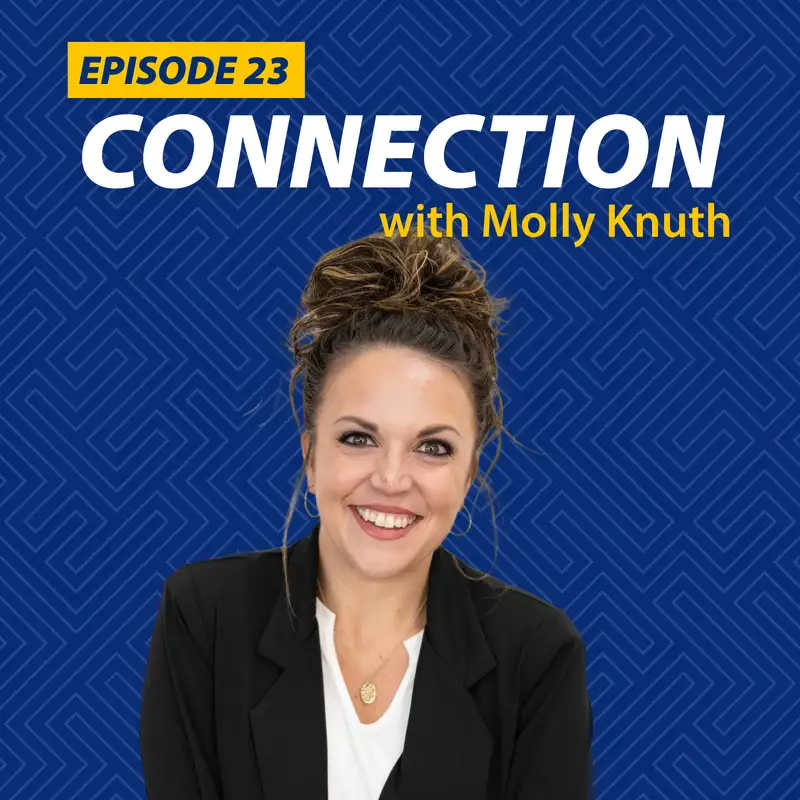
Amy Lasack:So I wanna welcome Molly Knuth. She's a storyteller, strategist, and connection creator based in rural Iowa. A former teacher turned entrepreneur, she spent nearly a decade leading Molly Knuth Media, helping small town businesses share their stories online with heart. Now as managing director at the restoration project and host of the found podcast, Molly helps leaders reconnect with themselves, their purpose, and their people. Blending practical tools with heartfelt reflection, she inspires others to move from overwhelmed to aligned and reminds us all that connection is the foundation of meaningful leadership.
Amy Lasack:Molly, welcome.
Molly Knuth:Thank you so much for having me, Amy. I'm feeling very humbled and lucky to be here with you today.
Amy Lasack:Well, I'm so excited to chat with you because I, at one point in my career over several times, I have felt just about everything we just talked about. And I'm sure there are a lot of people out there that kind of feel the same way either right now or have in the past. So I think we're gonna learn a lot here in the next twenty, thirty minutes or so. But I wanna first learn a little bit about you, because your journey your journey is really interesting from high school teacher to business owner, I mean, you've done so many things. So can you talk a little bit about what that journey has been for you and how you kind of work through that?
Molly Knuth:Yeah. And I'll try to keep this succinct. But I was someone who maybe leaders listening can identify with. I was someone who never really knew quite what my career path was. I didn't have, like, a clear calling.
Molly Knuth:So back when I was in high school, I always got a little uncomfortable when somebody asked me, well, what are you gonna do? What are you gonna major in? I honestly didn't know. And so I went to the University of Northern Iowa with an undeclared major and allowed myself to just kind of feel out some of the some of the classes and some of the experiences and not put too much pressure on myself to have it all figured out right away. And that served me really well.
Molly Knuth:So while I was at UNI, I took a personality assessment that helped me align with the major that would be best for me. And so people listening, use use the resources available to you in your NICC offices because they really helped me. And when I took that quiz, it was revealed that I would probably be a really good teacher. And for the entirety of my high school career, when I considered a career in education, I thought a lot about elementary teaching, and this personality assessment made it clear that maybe I should consider a secondary teaching career. So I moved forward with an English teaching degree, and I loved it.
Molly Knuth:I was always an avid learner, an avid reader, and I thought the prospect of helping tweens and teens find that love of reading and the lessons and themes we can extract from it, I just thought that was so great. And so I went forward. I got a, I was lucky enough to get a couple of jobs here in my hometown of Cascade working for our local Catholic school in the middle school setting and then moving to Cascade High School where I had the opportunity to do my dream job of ninth grade English language arts. But fast forward a couple of years, my husband and I had gotten married. We had three kids in three and a half years.
Molly Knuth:And pretty soon, it was like, okay. Maybe I can't do this full time thing when I've got this many little kids. And so I became a stay at home mom. Couple years after that, I was starting to help local business owners get found on Facebook because I had some experience in using social media to help procure books for my classroom when I was teaching. And I went from a classroom library of 50 books when I started to over 400 books just through the donations of people through social media.
Molly Knuth:And so I thought maybe I could help small businesses do that same thing. And so I started Molly Knuth Media in 2017. And within a couple of years, I was I had a full slate of clients who I was helping tell their story online through social media websites, and then pretty soon, I had a podcast. And now today in 2026, I have pivoted from working mostly in the marketing online space to helping others find their calling through leadership. And what was revealed to me in working with clients and with Molly Knuth Media is that in your business journey, it has a lot to do with the products and the services you offer, but there's so much more that it reveals to you about the person you are and making decisions aligned with what you value.
Molly Knuth:And so, one of my clients, the restoration project down in Cedar Rapids, Iowa, they worked in leadership coaching and consulting. And I had the opportunity to join their organization on a deeper level, and that's how I got to be managing director. So a very twisty turny, circuitous journey in my career, but one thing it taught me is that nothing is left behind. There's something from every one of those experiences that I use today and helps me connect with other leaders who are looking for that same alignment and connection in Yeah. Their own
Amy Lasack:So I'm sure through your conversations with all these leaders, you've seen some of them that have felt disconnected, whether it's not a match with their values or maybe they're just balancing too much, feeling overwhelmed. What are some of the early signs that you see from people when they've lost touch with themselves in their job?
Molly Knuth:This is a really good question. And it's one that I have felt myself personally, and it's one that even as recently as yesterday, I was speaking with someone who had some of these signs. And I think one of the major indicators of this disconnection is this feeling of internal discomfort and asking yourself a question, what am I even doing? To me, that's an indicator that something is out of alignment and needs to be addressed.
Amy Lasack:Yeah. I always joke, but there's a little bit of truth with it. I always say that if I start dreaming about people at work, I need to self evaluate, right? I mean, like, do I need a little break? Do I need to take care of me first?
Amy Lasack:Because am I thinking about this too much? Where's the balance for me? So I think for some people, it might be a little different, and they need to figure out how do I recognize that in myself before I get to that tipping point.
Molly Knuth:Yes. And everybody's got some of these signs and symptoms. So I'm glad you brought that up, Amy, about like, you start to have dreams. And some people start to have racing thoughts. And some people start to there's just like a lot of these internal dialogues that you have these specific cues that over time you can see patterns in that reveal when something is amiss.
Molly Knuth:And so I'm really glad you brought up that example.
Amy Lasack:Well, and I love that you talked about the personality assessments in your first conversation about your journey, because I'm a believer that the more you know about yourself I take every single test out there because I wanna know every piece of myself and all the different quirks that I have and where my tendencies are because the more that one knows about themselves, the easier it is for you to start seeing those signs.
Molly Knuth:And maybe we might be getting here, but I might fast forward us a little bit. Like, one of the things that we do at The Restoration Project, we have this model that we use. We call it the restoration model, and it's a pyramid structure. So listeners may be familiar with Maslow's hierarchy of needs, also a pyramid structure. But at the base of our restoration model, if you ultimately want to be a leader, whether that's in your home, in your organization, or in your community, that leads with love.
Molly Knuth:That's like the tip of the pyramid. All the way down at the base, that foundational level is knowing yourself, understanding yourself, understanding your patterns, the stories you tell yourself, the beliefs and the values you hold, and also making space to honor others and how they understand themselves too. That's that foundational level of restored leadership. And like I said, we might be getting there later in the conversation. But what you said about personality assessments, there are so many tools that we can use to help clue into ourselves.
Molly Knuth:So that personality assessment I took way back in 2006 or '7, like, that helped me with knowing my career path. Today, I know that internally at the restoration project, we use a tool called the enneagram so that we know how we act and interact with ourselves and also how we show up for others so that we can start to use common language and understanding in our team culture and dynamics. And there's other things like the CliftonStrengths assessment, stress StrengthsFinder. You know, there's just so DiSC. There's a lot of different things that you can do to start tapping into that internal self, and that internal self is that foundation of your leadership.
Amy Lasack:Absolutely. I've taken all of those, and they're all great.
Molly Knuth:Was listening pieces. I I listened to Amy Poehler's podcast, Good Hang. And there was an interview she did with someone, and they began the conversation saying, hi. I'm an Enneagram three. I am a Cancer.
Molly Knuth:Like, they just did all of these assessments and, like, their personal type. And I was like, this is how I should start every podcast. It's so
Amy Lasack:insightful. That's awesome. You and you can really learn a lot about somebody if they were to list, like, five different personality assessments that they've taken and where they stand. For sure. It's pretty amazing.
Amy Lasack:Well, I wanna move on to a word that I feel like we have heard more in the last five years, which is resilience. And it's become one of those things that people, I think, mean it as a badge of honor. Oh, you're so resilient, or you've done that. And I know I heard it a lot when I was caretaking with my parents and working at the same time. I get that why people do that.
Amy Lasack:They wanna be complimentary. But from your perspective, what does that really mean? And is there such a thing as a healthy resilience? And what does that look like?
Molly Knuth:Amy, I'm really glad you brought up that personal side. And just as a personal aside here, in the second year of my business, so back in 2018, our daughter had an acute medical emergency that one day she was fine. The next day she was paralyzed on her right side. That's scary. So that it was very scary.
Molly Knuth:And ultimately, it led to eight weeks of being between Stead Family Children's Hospital in Iowa City, Child Serve in Des Moines, and coming back here to be with the rest of our children. And throughout that process, to your point, we got so many compliments of, like, you guys must be so strong. Like, you're so strong to be going through this. And I never real it never really felt like that word was a fit because to your point, like, it's not like we would choose to have to show our strength, to show our resilience. Right.
Molly Knuth:But what we can choose is being brave or courageous. And so when we talk about resilience, yes, there is an element that's internal in us that that ability to bounce back in unexpected scenarios and situations, but there's also a choice that is inherent in there that even if I don't feel strong today, I can choose to take one brave, courageous step. And so that's something that I tell a lot of leaders is like, you're not always gonna feel like it, but you can do something brave that moves you in the right direction. And to apply that to what we do at work, sometimes I think about, like, this concept of never giving up or toughing it out or just keep going, you know, against all odds. And I think about that in, like, a control aspect.
Molly Knuth:So if you're listening, or if you're watching, if you're listening, like, imagine closed fists. Like, if I were to give you something to help you in your job, and I approached you to hand you a pen or a piece of paper or a computer or a wrench, whatever that role or that title or that job is that you do. If I approach you to hand you something that will help you and you are approaching me with a closed fist, how can I hand that off? I can't if you're coming to me with a closed fist. And that's a little bit how sometimes I view this mentality of never giving up.
Molly Knuth:We want to control something so much that we never want to give up, but that's like having closed fists. If we can allow others in, if we can allow other perspectives, other methods, if we allow others to give us tools and recommendations, and we approach that with an open hand, then we can receive that. And so when I think about resilience in the workplace, I think about this concept of, you know, sometimes that never give up, never quit mentality is appropriate, but sometimes we have to open our hands up and say, we just have to release control. We have to allow other scenarios to maybe come into the light, and we have to say sometimes the things we try in leadership don't always work. And if we continue to white knuckle and control and, you know, grip with closed fists, it's not necessarily going to get us to where we wanna go to the right solution.
Molly Knuth:We have to open up those hands. So sometimes we have to instead of the not give up mentality, we have to say, okay. Maybe this didn't work, I need to try something else.
Amy Lasack:So what would be a recommendation that you have to a leader who maybe has tried to keep going and they've just reached a point? What is something that somebody that has gotten to that point and and knows something has to change? What are some techniques or things that you've worked with folks on how they can identify what needs to happen next?
Molly Knuth:I've been in this scenario a lot where, especially when I was an entrepreneur or small and small business owner where I was like, something's gotta change here. And I would look outside myself for the guru that I could follow or the blueprint that I could purchase online for $27.99 that would give me all the answers. But what I found is that those can be guides. They can definitely be utilized to inform me, but more often than not, the answer didn't didn't live outside of me. There was something inside of me, my intuition, my gut feeling, that often revealed the next best step.
Molly Knuth:So what that can look like is a lot of different things. You can obviously work, with a coach or a mentor that you trust that can listen to where you're at and give you guidance from either their educational background or their experience. Often, found that telling our story and sharing it with someone who we respect and who maybe has walked the same path can really give us insights and can speed up our process to getting back to that right next step. So working with a coach or trusted mentor is really helpful. I've also found that in those moments where I feel like something's gotta change, I am internally operating from, like, a sense of urgency emergency, And the answer to that is not finding a solution outside of me that encourages me to push harder or go faster or achieve more.
Molly Knuth:It's often that in those moments, I feel it serves me best to slow down, to get reflective, and to really tune in. And so by answering some questions like, what matters most right now? Answering the question like, what does success look like today, this week, this month? That can help me really find those tasks and those engagements that are most meaningful and aligned to me that will ultimately make me feel more fulfilled and make this feel a little better. So really looking more internal, I think, is is the the theme here, but there are a lot of different ways, a lot of different tools, resources, people who can help you do that.
Amy Lasack:Yeah. Very good points. And I think for I'd I'd be curious on your take on this too, because I think for some leaders, they might want to keep, like, a shield up for their team that, you know, don't show too much emotion at work. How can leaders model this type of self awareness that you're talking about and not come off to folks on their team like they're oversharing or this is therapy time or any of those things that I know a lot of leaders are a little scared of where's that fine line?
Molly Knuth:Oh, this is a really good question, Amy, because I know that there is a fine line. It's a dance that we have to have to maneuver because we want to and you know, engagement shows that being your authentic self is what's best for you, for your peers, your colleagues, and in the workplace. And so it can be hard to know what that exact line where it lies. And one thing that we do at The Restoration Project is that we walk the walk. We don't just talk the talk.
Molly Knuth:So when we are working with clients to help them understand themselves, honor others, act with integrity, live with courage, lead with love, we are doing some of those same things ourselves. So what that can look like is at in each quarter, we have a half day that we set aside, and that half day is where we come together and we have intentional time to do what we call stop, start, continue feedback. And maybe listeners are familiar with this. But we will come to that meeting with stop, start, continue feedback for ourselves and for others. So we're assessing what can either me personally or someone on the team stop doing.
Molly Knuth:What would that look like? And for example, one time I got really helpful feedback from a colleague like Molly, you can stop putting so much pressure on yourself that these things have to be perfect. It's okay to just let them be good. And that was really good to hear from someone outside of me Yeah. To tie in personality assessments.
Molly Knuth:I'm an Enneagram three, which means, like, I really value doing things perfectly. So that was great feedback. So that's stop. And then start, what could I start doing or what could someone on the team start doing that would improve our culture or improve their performance? So, again, to tie in a real example, I received feedback from colleagues that I could start being more reasonable and realistic with timelines.
Molly Knuth:Again, as an enneagram three, I had a tendency to feel like I could do all the things. And it was coming from a really good place, but I would not give accurate, I wouldn't give ample enough time to execute. I would be like, yeah. I can do that in an hour, and really it would take me two. And it wasn't coming from a bad place, but it was just coming from being a little overambitious.
Molly Knuth:Sure. And so that was helpful feedback. And then we talk about what should someone continue doing. What are they doing really well that we want to see them keep doing? And that to answer and bring us back to your question about how do we know how much to share?
Molly Knuth:How do we know where that line exists? For us, this is a really great activity that we have plugged into the calendar quarterly, and then we tie that into our monthly and weekly meetings so we can hold each other accountable. And that allows for us to have some guidelines to sharing, but it also allows us to make sure that we are including some of these things in our regular communications and check ins with one another.
Amy Lasack:Yeah. I love team dynamics. Exactly what you're talking about is that you can have those very clear conversations and know that you have each other's back. You're gonna give them the good, the bad, the ugly because you know it's in the best interest of not only the team, but the individual as well and that everyone around the table wants that for each other.
Molly Knuth:Yes. And it's I must say, like, you know, this didn't happen overnight. It's not like we went from not sharing anything with one another to, okay. Next meeting, we're gonna start this stop, start, continue. We want you to be very open.
Molly Knuth:You know, feel free and safe to say anything. It was definitely an intentional choice by my colleagues when they founded the restoration project to have these very human conversations that included not just what are we doing in our work, but how are we being in the leaders that we're showing up as. And so making sure that it was you know, creating that safety was something that was intentional. It was done over time, and it has allowed for us to show up really true in these stop, start, continue conversations.
Amy Lasack:Yeah. Very good point. So as you're working with individuals that have reached a point of burnout, when you're working with them, how you know, there comes a time where an individual could be like, hey. I'm burnt out. I still love my job.
Amy Lasack:This is something I need to self reflect on, figure out how to balance myself. And then I see other times where it's maybe just not a right fit with the company. Maybe the values of that individual and the values of the company have changed, and that's what's causing that rift. How do you help individuals identify which one of those things it is and therefore identify how they approach what their next decision needs to be?
Molly Knuth:This is a really good question. I've said that every time. You have very good questions, Amy. I I was just talking with topic,
Amy Lasack:so that makes it easy.
Molly Knuth:Yes. I was just talking with someone yesterday who came to me, and wanted she was at this same point that we've been talking about. She's like, I am at a place where I just feel like things aren't quite right. I don't know the next step to take. And she acknowledged that I might just be a little burnt out because she had a lot happening in life.
Molly Knuth:She had a lot happening, and she was had her hands in three different businesses. And so, you know, rightfully so, she was feeling a bit overwhelmed. And so one thing that we really make sure to focus on with our clients through the restoration project is that life and work don't happen inside of really clean, clear, separate containers. Right? Instead of, like, work life balance and I get that image of, like, the scales where you're trying to make sure not one scale is high and one's low.
Molly Knuth:You want it to be even. I've never really liked that imagery because we never will have it equally balanced, maybe for a day, maybe for an hour, but it's very rare that we can sustain that balance. So I like to think of work life integration, and that's what we do with our clients at The Restoration Project. Our goal isn't so that you feel like you can execute a 100% on work and a 100% on life and a 100% in your volunteerism. It's how do we integrate all these concepts so they're not perfect, but they're intentional.
Molly Knuth:And you know when you are giving your most time, energy, resources to life and family, and you know that that means work might need to take a backseat for a little bit because it's a season of life. And there might be a different season where you can give more to the work side or the volunteerism side when the kids are out of the house or they're back in school age. So we really work with meeting clients where they are and understanding that it's not about being perfect. It's about being intentional. So we can do that through using tools like a values exercise.
Molly Knuth:We can use that by using tools like a wellness wheel to assess, like, where am I not feeling well? Because there could be maybe your physical wellness is off. Maybe your mental wellness needs some to be addressed. Maybe it's your spiritual wellness. Maybe it's your social wellness.
Molly Knuth:All of those play a part. And so to bring us back to that client that I talked to yesterday, one of the things we were talking about was how she has this really great career, and she can see where that career is gonna go. And there's a lot of things that that career will fulfill for her and her family financially, within the community, etcetera. But there's this passion and the creativity that's a part of her that she really wants to bring to fruition too. And so one of the conversations we had was sitting with it, giving it time, reflecting, using that values exercise that I shared a little bit ago.
Molly Knuth:And also, like, considering, does it have to be 100%? Does it have to be 100% creative endeavor or 100%, you know more business endeavor or can it be that she allows her career to be 80% and then this creative endeavor could just be like she gives 20% effort to it. Maybe this creative endeavor is like a pop up shop. Maybe it happens seasonally. It doesn't mean it has to go into this full scale small business.
Molly Knuth:It could just be something that fulfills her creative passions in this more hobby setting, and it doesn't have to be monetized. And so it takes us sitting back and considering and understanding ourselves, what are our motivations for this, how is this aligned to my values or not, and then we can have a better, we can be more discerning in the choices that we're Sure.
Amy Lasack:And the wellness wheel, I've done that before too. It is such a nice visual. If you just feel like something's off and you sit down and you do that, that really just gives you an idea of, gosh. Okay. Now now I need to focus on this area.
Amy Lasack:I I think that's where
Molly Knuth:it's done like yeah. And something I've done in the past, I'm not sure if listeners will relate to this, but one thing that con like, not constantly. I have seasons where I'm really good at this and seasons where I tend to fall off. It's giving myself credit. Again, as an Enneagram three, I really prioritize, like, efficiency, productivity, getting things done.
Molly Knuth:And sometimes that means that I am in such a go go go mode that that can get me to that burnout stage. And I'm not giving myself credit for a job well done. I'm not taking time to celebrate when I get a big thing off of my plate. And so one tool that I've used for myself and then with a recent empowerment community group that I led in the fall of twenty twenty five, we started the, the experience with one week of tracking our activities. And so in those moments where I'm like, I am just not doing enough, I feel like I have so much to on my to do list, yet I'm feeling depleted because I'm burning myself out, burning the candle at both ends by just itemizing a list.
Molly Knuth:And it really does look like just a play piece of paper that's like, what did I do at 5AM? Well, I woke up. I went over and ran on the treadmill for two miles. I came in the house and made breakfast for the kids. 06:00, woke everybody up, did chores, got them out the door for school.
Molly Knuth:07:00, commuted. 08:00, got to work, talked to blah blah blah. And so then you begin to itemize, like, what did I actually do? And you see on paper, like, your brain might be telling you that you didn't do enough. But when you look at it, you're like, I have done so much.
Molly Knuth:And sometimes it's just that activity of listing it out can help you flip that switch in your head of saying, I am doing enough. I'm actually showing up in maybe an maybe an overperforming, mode. And then, again, you have the data to help you make better decisions on how you can correct that.
Amy Lasack:That's fantastic. And, Molly, I feel like I can have you on the podcast three or four more times. I have so many other questions and things that we can talk about. But I do wanna put some time aside for you to plug away some things that you have going on because, you do have your own podcast, the Found Podcast. So I want you to talk a little bit about that.
Amy Lasack:And then we at NICC have some fantastic things going on with you in the future as well. So can you just briefly talk about the Found Podcast?
Molly Knuth:Yes. So the found podcast, I started that back in 2020, and it was a result of me well, again, to tie in a personality assessment, I learned that one of my strengths, my top strength is learner. And originally, I was like, what? This is so boring. Like, why learner as a strength?
Molly Knuth:But after I kind of connected the dots backwards, I was like, yeah. Learning and synthesizing other people's findings has always helped me show up better. And so when I was starting my own small business and from knowing my career trajectory, I don't have any business experience or education. And so when I was starting Molly Knuth Media, I learned what to do from podcasters who shared openly, freely what they did, what they tried, what worked, what didn't, and then I could apply that to my own business. And so in 2020, after having about three years of small business ownership and entrepreneurship under my belt, I thought, how can I help others who are coming along beside me?
Molly Knuth:And a podcast was how I wanted to do it. So the Found podcast was began in 2020, and so I've got a little over five years and almost 250 episodes under my belt. They vary in range from me just showing up at the mic, being open and authentic. One of my most recent episodes was five mistakes I'm embarrassed I made in 2025. And two, sometimes they're more educational, like how to show up better online.
Molly Knuth:There might be interviews. Amy, you're an upcoming guest on the podcast. And I sometimes they're local leaders. Sometimes, like in March, I'm gonna have someone who resides in Paris on the podcast. But it all comes back to, the stories of ambitious founders, the found podcast.
Molly Knuth:And whether that means they founded a business, they found a nonprofit, they found a cause, or they're finding themselves along life's journey, there's so much we can learn from every person's story. And so that's what I bring to the show.
Amy Lasack:That is awesome. So anybody I would encourage to go ahead and go out and follow the Found podcast so you can hear more from Molly. And then but also with NICC, you are one of the speakers at our Trainer Talent Development Expo, which will be in Dubuque on March 18. We have a couple very talented speakers coming in, including Molly herself. So if you wanna hear more from Molly, we would encourage you to go ahead and get signed up and registered for that.
Amy Lasack:And then also back in in June, you're gonna be back with NICC talking about becoming a more collaborative leader, which sounds perfect based off of what we've been talking about here the last half hour during our business consortium. That's We're so excited to be partnering with you at Northeast Iowa Community College and our work with our Business and Community Solutions group.
Molly Knuth:I am just so appreciative for the opportunity. There are so many great things that NICC does for the local area. Obviously, the education that's provided for students, but beyond that, what you guys do with business and community solutions, the way that you engage with local organizations and schools, there's just really so much opportunity that NICC provides to all of us in the local area. And so I'm really excited for the opportunity to be part of both the Trainer Talent Expo and the Business Consortium to share a little bit more about restored leadership. And if anybody wants a little bit more information about those events, upcoming speaking events I'm doing elsewhere, any of the tools that I have discussed, you can go to mkm.myflowdesk.com/nicc, and I've shared that.
Molly Knuth:I'm sure you guys will have it in the show notes. But if they input if listeners input their email address at that landing page, I will reach out personally to help connect you with what you are looking for. It's not gonna trigger some lovely automated response automatically. I just want to really intentionally engage with anybody who goes to that, mkm.myflowdesk.com/nicc. I will follow-up personally and help you get in touch with either the tool, the resource, or the next best step for you.
Amy Lasack:You brought it full circle. It's all about making those connections and having connectedness. So that's fantastic. Well, Molly, thank you so much. We definitely need to have you back.
Amy Lasack:I have like I said, I have a lot more questions for you. So thank you so much for joining us.
Molly Knuth:Thank you so much, Amy. It was such a pleasure to be here today.
Amy Lasack:Great. So and thank you everybody who tuned in to listen. I I loved this conversation about reconnection, starting with ourselves and how that really can make an impact both not for your only for yourself, but your workforce and for your team. So thank you for spending time with us on The Catalyst, and go ahead and make a difference in the future for yourselves and take a look and see what you might be able to implement from what we learned today. Thank you.
Amy Lasack:Thanks for joining us on this episode of The Catalyst. If you enjoyed the conversation, make sure to follow or subscribe on your favorite podcast platform so you never miss an episode. Want to learn more about NICC and the many ways we support our students, partners, and community? Visit nicc.edu for more resources and upcoming opportunities. This podcast is produced by Northeast Iowa Community College and hosted by me, Amy Lasack, with executive producer Tessa Hill, producer Travis Hunt, and graphic designer Ashley Konzen.