00;00;00;00 - 00;00;34;01
Come to The Catalyst, an exciting and insightful podcast produced by Northeast Iowa Community College. I'm your host, Amy Lasack. Together, we'll explore the people, programs, and partnerships that make Northeast Iowa Community College unique. From student success stories to behind the scenes info about athletics, innovation and industry collaboration. Each episode dives deeper into your community's college. Get ready for an inside look at the impact of community driven education at NICC.
00;00;34;04 - 00;01;02;11
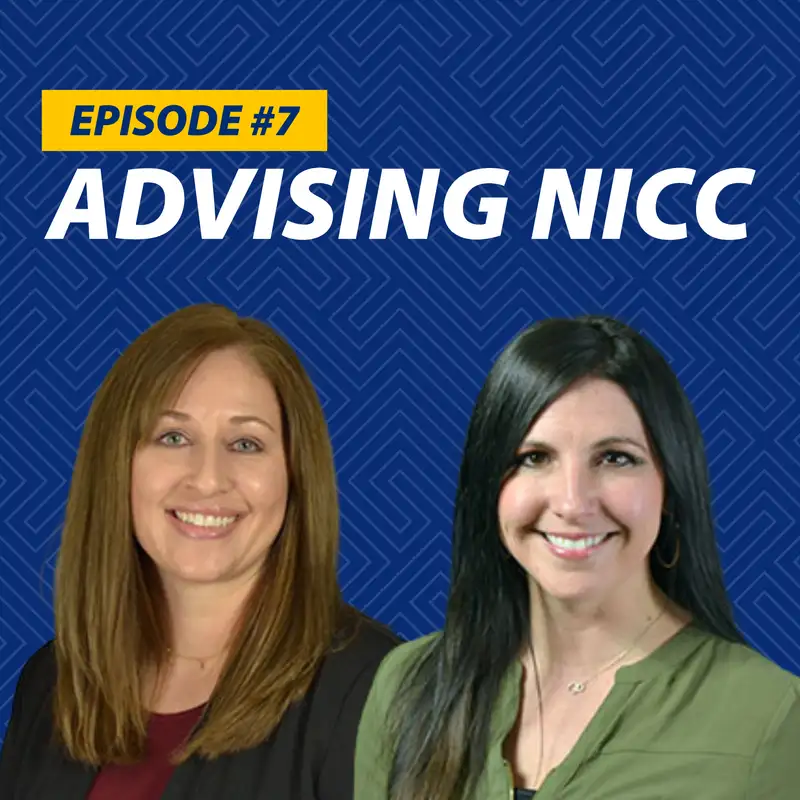
Well hello everyone. And today's episode of The Catalyst. We are talking to two folks from NICCbehind every student at NICC, there's a team helping guide the way, helping remove barriers, helping make sure students are comfortable and know their path. And today we have two of our academic advisors, Katie Kime and Lindsey Haas. Lindsey specifically works with students enrolled in competency based education CBT, which we'll talk a little bit more about.
00;01;02;13 - 00;01;31;03
And Katie also provides customized personal advising for students in a variety of different programs at NICC. Welcome to you both. Thank you. Good to be here. Thank you. So for those that aren't really sure what is advising at a college. What with academic advising. We meet the students at where they're at coming into the college. Some of them have met with admissions and onboarded with our admissions reps.
00;01;31;09 - 00;02;02;07
Some haven't really talked to anybody yet, so we might be almost their first point of contact. But we are there to help them guide them through, looking at the career that they're interested in and a path for getting to that career. So whether it's, a certificate, a diploma or a degree, looking at their, their test scores where they're placing with their high school transcripts or with those test scores, and just setting out, laying out the foundation and the path, for how to get to their ultimate goal.
00;02;02;09 - 00;02;23;27
Great. And what what brought you both to NICC? What did you do before you came here? Yeah, I, I kind of have a I a majored in business. I worked in insurance for a while and then realized that I really wanted to, do more in of helping people and working with people and and helping them reach their goals.
00;02;24;01 - 00;02;53;01
So I worked at another college for about ten years. I worked in admissions, and I worked in advising. I really liked admissions, but I wanted to build more of those longer term relationships with students. So I moved into the academic advising role. And, when this role at NICC opened up, I was so excited because it's even more of, building a, more in-depth relationship with students.
00;02;53;03 - 00;03;13;01
My role is actually a success coach. So not only do I kind of do the front lines admissions, but I'm also working with them throughout the semester, meeting with them every few weeks and just doing regular check ins to ensure that they're staying on track. And and part of that's the unique nature of our CBT program, which I'm sure we'll talk about later.
00;03;13;07 - 00;03;33;14
Yeah. And I was introduced to NICC, almost three decades ago. I was searching as a student. You know, what did I want to do when I graduated from high school? And, I ended up coming to NICC for my first two years. I worked in the bookstore. So my first job at the college was working in the bookstore as a work study.
00;03;33;14 - 00;03;57;18
So a little money in my pocket while I was, going to school. And then after I finished here, I went on to Abreva and finished my bachelor's degree. And from there. And so I consulted and decided to go into, a career of more human services. So I went up to Minneapolis for a little while. I enjoyed the city's, but I knew the small town was, more more me.
00;03;57;20 - 00;04;23;14
So I moved back and, worked with families and children in this area in the four county area. And while I was in that position full time and opening came at NICC, with the trio Upward Bound program. So working with, students whose parents maybe didn't have a college education or perhaps, their income was a little lower and just maybe needed some additional support in other ways.
00;04;23;14 - 00;04;48;15
And and right away I knew, that that was a good fit for me. And I wanted to apply for that job because, I feel like that's, how I was raised and and it was, a I would have been. That student's right. So I applied for the job and was working part time, with NAC while full time and Human Services and then a full time position, became available as an academic advisor at the college.
00;04;48;18 - 00;05;17;08
And so I transitioned into that, and I just have always enjoyed working with students, in this role. So that's great. And I think for a lot of people who aren't familiar with what advising does at a college, they they get confused of the roles of, admissions, recruiting, advising. Right. So how would you how would you describe that for somebody who just doesn't quite understand where those different paths are?
00;05;17;10 - 00;05;46;23
Yeah, I think, you know, from an admissions perspective, a lot of times you're kind of the initial, and, and it goes along with recruiting. You're that initial contact when someone indicates that they want to go to college. And, the important part about that is staying in, with, you know, once they get in, helping them with that placement testing, helping that with the financial aid, those kinds of things.
00;05;46;26 - 00;06;13;16
And then, in the admissions role, we help them more with registering for classes, how to prepare for being successful in their classes, and then continuing on with that. And we work with them until they're ready to graduate. Gotcha. And we mentioned it in the intro, but Lindsay CBE, competency based education, can you tell us a little bit more about that at NICC?
00;06;13;18 - 00;06;49;15
Yeah, the competency based education program, is it's a little bit of a unique program. And it's it's focused on mastery of competencies and skill sets. And so it is very much focused on, allowing students to progress as they master the their competencies. And these skills are knowledge and they can move faster if they already have some prior knowledge or some background in it, but they can also, move more slowly if it's a concept that they need more, that they need more time to master, or if that is unfamiliar to them.
00;06;49;18 - 00;07;12;26
And so it's kind of focused on learning for mastery, but also that flexible pacing. So the flexibility to create their own schedule is huge and really appeals to a lot of students, especially adult learners or students who are working. And so my role as the success coach is to work with them because it is important to stay on track and and complete the courses.
00;07;12;26 - 00;07;40;28
And so helping them, navigate that and, providing them with strategies, to move forward and to make the most of the flexibility that our competency based program can provide and which programs at Nscc does have. CBE currently, yes, we have, Business Administration, we have the Associate of Applied Science and the certificate kids. And then we also have our welding diploma program.
00;07;41;00 - 00;07;59;02
Fantastic. Yeah. You know, a lot of people, that are in education and think about CBE, that is one of the things they talk about is how it allows people to move quicker through programs. But you raise a really good point that it also allows you to slow down in those pieces and spend the time that you need to to really grasp the concepts.
00;07;59;05 - 00;08;19;18
Yeah, it's very, very personalized. And so that's one of the best parts about my role. One of the very first things that I do with students is really look at their goals. You know, some students, they, you know, some students can move faster. They have a lot of experience in an area and some, you know, there might be certain courses or, concepts that are unfamiliar to them.
00;08;19;18 - 00;08;42;13
And so it does allow them to take the time they need. And so that's part of my role, is working very closely with them to figure out what their individual path looks like. That's great. And so, Katie, what are some of the biggest challenges students face when they come to you for advising? Sure. Those challenges can really very you know, we serve students of all ages.
00;08;42;19 - 00;09;04;07
So we might have students that are still in high school. We've had some as young as eighth graders, come into the college and taking classes. We have students that are adult learners. You know, I think my oldest student was 72. So their challenges may come, in different ways. Someone younger, you know, just an eighth grader or high school student is still used to that kind of structured environment.
00;09;04;10 - 00;09;22;14
That, you know, they're being told what their schedule is and if they're late or tardy or not, they're someone's checking in on them all the time. Right? Their parents are maybe heavily involved at that stage in their life, or they have some type of support person, maybe a grandparent, but they kind of have someone kind of mother handing them, right, or watching over them.
00;09;22;17 - 00;09;39;00
They come to the college and they maybe have a little bit more freedom. Someone they're not, they're not being told where to be. And they have a schedule, but it's up to them to manage their time. So that would be a challenge. On the more traditional age. You know, an adult learner, their barriers might look very different.
00;09;39;05 - 00;10;08;27
They're balancing families and transportation and mortgage bills and, some maybe lose their housing. They have some, some additional stressors. They might have learning needs that are different. So just technology, technology can be, an obstacle possibly for some students. They, they know how to use social media and they can turn on a computer and use, you know, basic tabs, but maybe they haven't used programs before or, locked down browsers and things like that.
00;10;08;27 - 00;10;33;27
So, you know, we're helping them with all of that, figuring out where they're at. What are those barriers? How can we overcome those barriers? What resources do we have at the campus to help them? The learning center, we have accessibility services, for students that maybe have a learning disability or a physical disability. The counseling services for any student, no matter if they're having one bad day or several bad days, they just need help with time management.
00;10;33;29 - 00;10;53;13
You know, the learning center can help with all kinds of needs with, tutoring. So, again, just where are those barriers and what resources do we have in our at our college or in our community that can help them? In that time of need? Yeah. You're really playing the connector role for the students to make sure that they're successful.
00;10;53;13 - 00;11;12;16
And there's so many resources that are college. I imagine somebody coming in number one probably just doesn't have any idea that all of this is available for them, but it can be so overwhelming to so to have a a familiar face help guide them, I imagine can be a relief for some students. It is. And they and they come back to us.
00;11;12;23 - 00;11;34;04
I was just sharing with Lindsay, last week I had a student come in who, is looking at a big career change, you know, and she said to me, she reached out to me, outside of work, and she said, can I meet with you on Thursday? Absolutely. Come on in. And she said, I don't even know if you're the right person, Katie, but I always felt safe in your office, and I know I can be myself with you.
00;11;34;10 - 00;11;52;00
And so she came in, you know, maybe she should have started with admissions or career services. But I was a familiar face, and she knew me well, and she knew she could come here and we would get her where she needed to be, you know? So we called career services while she was in my office. You know, we laughed, we joked, we had some serious conversations.
00;11;52;00 - 00;12;14;20
So to, you know, and by the end of that appointment, you know, we spent a little extra time, but we had talked to Career Services. We were calling other colleges for the program that she was looking at, because NICC didn't serve or offer that program, but we served her in the past with the program that she was in previously, but she knew this was a place that would get her to the answers that she needed.
00;12;14;22 - 00;12;41;07
Yeah, you're really helping guide, guide students on their path and whatever that need may be to get down that path. That's fantastic. What advice do you both find that you're giving the most often to students that come to you? I, I would say, you know, initially it is more of, you're not alone. Everyone gets overwhelmed, especially at the beginning.
00;12;41;10 - 00;12;58;29
And so those are things that I think sometimes just knowing that it's normal to feel this way. And we can we can help you and like Katie was saying, we have a lot of resources. And sometimes it's just breaking down the different steps that you need to do. Let's break it all down and take things one at a time.
00;12;58;29 - 00;13;20;25
So let's take that next, that next step. And by getting through that, it's great to see when I talk with students, you know, from the beginning of their first semester, at the end, and just to see how much they've learned and how far they've come and, you know, that they're able to make it through and, and just, you know, all the things that they're learning and more comfortable with by the end.
00;13;20;28 - 00;13;40;27
Yeah. Don't try to climb the whole mountain at once. You take it off into two little steps at a time. That's that's great. And sometimes that's all that's needed, right? Just to to guide them and get that encouragement and to feel empowered. You talked a little bit about this before that you working with could be high schoolers.
00;13;40;27 - 00;14;05;02
It could be somebody returning to work. Do you change your approach depending on that type of audience that you're working with? 100%? And we even talk about this as advisors. You know, even that first outreach, what does that look like? You know, some students would prefer text messages, some would want email, some would want phone calls. You know, we try to do a little bit of everything for everybody because you don't know how that student is going to respond.
00;14;05;02 - 00;14;23;19
But, I feel like, you know, once you know how to communicate with the student, and you're aware of, of, you know, maybe some trends, right? Like, you know, maybe the more traditional students you can, you know, be a little bit more chill or relaxed. You know, you kind of change your demeanor a little bit.
00;14;23;22 - 00;14;43;17
You know, some of more of our traditional students, like, give me the meat and potatoes, right. Like, they like, I don't have time to waste here. I'm here. You know, I'm juggling all of this stuff. How do I get to my goal? Whereas again, you're kind of just kind of mentoring and guiding and being a little bit more, hands on for the students that need it.
00;14;43;20 - 00;15;03;17
Some just want, you know, a few touch points and they're good to go. And they have self-advocacy, self-advocacy skills. So they'll, they'll, they'll come to you when they need you. But but we're always there to guide them. Others we are a little bit more, checking in frequently, you know, because they, we just know that they need that additional support.
00;15;03;17 - 00;15;30;06
So you really, have to look at not just their ages, but just, again, just what they need. And at this time, NICC, and personalized that approach to those students. Hey, you bring up a really good point. It isn't a one way street. You're not sitting there waiting for students to come to you. You help identify when students might need you, and you're proactive in your outreach to serve.
00;15;30;09 - 00;15;52;19
Yeah, that's. So I imagine, part of what you have to do as, as well is get to know faculty and staff that cover all of these areas. Can you talk a little bit about how your job interacts with everybody across the college? Yeah. In my role, I work with a few specialized programs that are, competency based education.
00;15;52;21 - 00;16;13;05
So I work really closely with the faculty in those areas, and I'm working with, them to just identify maybe, areas where students are struggling or could use more support. And also kind of a two way street. Right? So I can see areas where students are struggling and provide that feedback so we can enhance and improve the program.
00;16;13;07 - 00;16;37;13
And it's really great to have those wonderful relationships, where we're just always looking out for the student's best interests and then working with, you know, all the other, all the other departments in the college, you know, the financial aid, all of our other student services teams, learning centers, our instructional design team. So we have a lot and there's many more that, that we can work with.
00;16;37;13 - 00;16;50;09
But I think that close collaboration shows students that we are all a team, and we are here to support them and want them to succeed. And so we will do what we can to make it happen for them. That's great.
00;16;50;09 - 00;17;18;22
So I imagine over the years that you have been advising that it is change. Are you seeing any trends or things that you've noticed with advising? Yes. We have, seen lots of changes over the years. I've been an advisor for over 20 years, and I've been advising for 15. So, we have a couple of decades basically of experience here and some of the trends that we noticed back in the day, as we'll say.
00;17;18;25 - 00;17;43;27
So let's, when we first started advising the, the classes were mostly face to face classes. You may be able to choose some daytime classes or evening would have been your flexible options, you know, evening options for students that were working daytime hours or weekends. And then that that kind of evolved. We started offering some hybrid classes, just kind of tinkering with the idea of part on campus, part online.
00;17;44;00 - 00;18;15;10
So students would have some maybe daytime or evening that were partially on campus and then they would do some online assignments and then, as we all know, then Covid changed that for everyone, no matter where you were in the educational world or even work world, things really changed, how we could offer the classes. And so we saw more of a demand, for online learning, even after Covid, kind of, slowed down, students kind of got used to that learning and that flexibility.
00;18;15;10 - 00;18;37;13
So there was more of a demand demand for online or hybrid. But, you know, I think we're kind of seeing, again, a little bit more trend of now students are requesting face to face, you know, they're back in the schools again for their their high school years. And they, are sometimes realizing that they might do better with face to face classes or even a mix and match.
00;18;37;13 - 00;19;01;03
You know, we can do some on campus, some online, so that you're not coming to campus every day, but you still can have some flexibility with the online. So I feel like that's been a trend. Now is kind of more of the, you know, tailor to the student. What can we offer you that fits? Again, your work schedule, your life schedule as best we can sometimes don't have that option.
00;19;01;09 - 00;19;24;10
And that is the reality. But we try to see how we can, meet their needs in that way. Scheduling. Yeah. And balancing all the all the demands on people now, whether it's family and work. And I know folks want to be really successful when they come back to school, but that's a lot that, folks have to really pay attention to now and try to balance.
00;19;24;12 - 00;19;45;02
Absolutely. Yeah, that is a lot. And that's what you know, I see in the the CBE, the competency based education program, that's one of the biggest appeals is that it does provide that flexibility. And it allows students to create their own schedules. So, they get to kind of set the parameters if they want to, you know, maybe work faster through a course.
00;19;45;02 - 00;20;03;25
They can if they want to work, a little bit faster at the beginning of the month and take some time off at the end of the month, that flexibility is there. And so it does, you know, and we have a lot of even just online learning and like you were saying, the hybrid, you know, kind of doing a little bit of everything that can help a lot because that's the kind of the reality that we're in.
00;20;03;27 - 00;20;20;21
We have a lot of students that are working full time, and they have families and especially our adult learners. You know, they're they have a lot and it's it's a lot to juggle. And we want them to be successful and even part time learning. I feel like that is in my programs anyway, that's becoming more and more popular.
00;20;20;23 - 00;20;48;25
You know, just because they can't they're not able to just quit everything and, and, commit fully to school. So they kind of have to do a mix of everything. Yeah. I think the one thing I've heard and chatting with the both of you is personalization is key. With this, customizing what each student needs really leads to you all feeling like a strong support system so that they can be successful no matter what their individual circumstances are.
00;20;48;28 - 00;21;11;25
Yes, I think that personalization and making them feel And notice that we hear you, we know where you're at. We are empathetic to your situation. If you're going through some hard times or you have, some other life things to work around. So that personalized care, is what keeps them coming back to us and again, and they know that.
00;21;11;25 - 00;21;45;13
And I think that's why they, have that trusting relationship with their advisors and with financial aid and with career services and the counselors and the learning center, because we we do recognize them as a person, not a number. And that is so important when you can touch lives in a way that they feel like they are not a number, that they are, a person, they will they'll be honest with you, you know, they, they build that trusting relationship with you and they will they'll come back.
00;21;45;15 - 00;22;05;05
And if and if they have to start school. But but step out for a little bit, and knowing that they can return, maybe get some personal matters in order and come back at a later time. That's okay too. I we tell our students that all the time. You know, sometimes they do need to step away for just a semester or a couple years and they can be even more successful.
00;22;05;07 - 00;22;24;17
So we are again, we're here for you when you need us, how you need us. That's fantastic. And I know, as you've looked back at the years that you've done advising, you probably have lots of students that have made an imprint, from seeing them the very first time they've come to talk to you and seeing them succeed.
00;22;24;20 - 00;22;40;05
Do you have any stories? Obviously without naming names, but any stories that you want to to share about the impact? Advising has had on a student? Yeah, I, you know, I work with a lot of students, a lot of, you know, I think we kind of talked about this when they come in, there's, you know, kind of that anxiety.
00;22;40;05 - 00;23;03;18
I have one in particular, that started out, you know, her kids were older and, kind of leaving the nest, and she realized she wanted to kind of find her own path, and, and, she liked her job, but she kind of wanted to explore some other opportunities. So we had really great, conversations at the beginning about all the programs that are available, career goals.
00;23;03;21 - 00;23;35;18
And then then came kind of once we, you know, had an idea of that, that then came the kind of nervousness about getting started and going. It had been many years since she had attended school and, so working with her to feel comfortable and again, take that one step at a time and learn the technology and, and, really at the time, management strategies, getting into that routine of, of managing work and school and, and what's really great is in my role as the success coach, I meet with students, every few weeks.
00;23;35;20 - 00;24;01;12
And so throughout that we would not only talk about academics and how the classes were going, but also just about her mindset and coming up with strategies for success and really talking about growth and, identifying ways that, you know, showing how she's improved, in different areas and how she's grown as a person. And it's really great because when we got to the end, that was what was most meaningful to her.
00;24;01;12 - 00;24;17;18
She sent me an email thanking me for my support. And, you know, in addition to all the skills and the knowledge that she gained, it was also just how much she grew as a person and how proud she was of herself. And and to me, that that made all the difference for her. Oh that's great. That gave me goosebumps.
00;24;17;21 - 00;24;47;03
Love hearing that. Sturdy. Katie, what about you? Any stories from your end? Oh, yes. I have to narrow them down. You said the experience. You have a lot of stories. But you know, some of them range from, like, when you've worked with a student for, you know, several years, watching them take on their first couple of gen eds being nervous about taking that first math class after being out of high school for a little while and and then watching them grow and develop through their program.
00;24;47;05 - 00;25;10;16
But I can think of a student who, she, and this was many years ago, but I remember working with her a lot. She, she was an adult learner, balancing, a family and a job and school. And on top of that, some a little difficulty with learning. She, worked with our accessibility services. To receive accommodations.
00;25;10;22 - 00;25;29;07
She was in the learning center every day, you know, before she'd go home, before her kids got home from school, she would be up in the learning Center and using that time to, study so that when she could go home, she could be a mom and make meals and and be with her kids. She worked so hard and she was able to go through her program successfully.
00;25;29;10 - 00;25;55;01
She, she went on for her bachelor's and master's, and now she teaches. She teaches how college. And she is empowering young minds and and probably helping students that were her at one time. Right. And just to see that like that circle of life, you know, and circle of education come around where, someone who has been through all of that and now helping others, it's just speaks so much, you know, or touching a student.
00;25;55;01 - 00;26;10;24
I have a card that a student sent. I helped her over the phone. I've never met her face to face. Just helped her over the phone. And she was a guest student. She's not here for a long day, but she's taking a couple classes and transferring them. And she took the time to deliver a, handwritten card to Piazza that came up to me at Kalmar.
00;26;10;26 - 00;26;35;17
Just seeing how much she appreciated our phone conversation and guidance and to help her transfer. And, I mean, the list goes on. It's just it's so heartwarming to to. And you don't even know how you've touched these lives, right? Like no clue. I have two family members that are in, the hospital right now, and, I was at the hospitals a lot in the last two weeks.
00;26;35;20 - 00;26;51;15
And I came across so many of my nursing students. I was in the elevator in lacrosse, and the student was like, hey, you know, like Katie and, you know, hey, where are you at? I'm not going out for my own a BSN right now. And, you know, we're both here for the patient, right? It's a family member and she's there.
00;26;51;15 - 00;27;15;28
She has her as his nurse, but we're talking are in the back of the in the hospital elevator, you know. So I went I got there and and just got back to, for a president. We, I was at the eye doctor talking to my, you know, the person doing my eye exam, and and I'm getting my eyes, probably, you know, dilated and and we're talking about her son needing statistics and what he needs to do for it that, you know, she took that message.
00;27;15;28 - 00;27;32;13
I didn't know I was just me, but she took that message to doctor. We, you know, and, just, you know, you just never know again how you're helping someone and you don't even realize it. You know, we're we're hope dealers. We're we're givers. We, you know, we're we're here to help our neighbors. We're helped here to help the community.
00;27;32;13 - 00;27;51;01
We're we're here to help each other's kids. So it's fantastic. Well, I want to thank both of you for the time that you're given today, but then also the imprint that you're making on hundreds and thousands of students over the years, you've really made a big difference in the lives of their students and the families and then ultimately the community as well.
00;27;51;01 - 00;28;07;19
So thank you very much for everything that you do at an ICC. Thank you for letting us share our stories. Yes, thank you so much. And I loved having you. And thank you all for listening to another episode of The Catalyst. Join us next time as we continue exploring the people, programs and communities at an ICC.
00;28;07;19 - 00;28;39;22
Thanks for joining us on this episode of The Catalyst. If you enjoyed the conversation, make sure to follow or subscribe on your favorite podcast platform so you never miss an episode. Want to learn more about NICC and the many ways we support our students, partners, and community? Visit nicc.edu for more resources and upcoming opportunities. This podcast is produced by Northeast Iowa Community College and hosted by me, Amy Lasack with executive producer Tessa Hill, producer Travis Hunt, and graphic designer Ashley Konzen.